Complete Tennis Chain Wholesale Buying Guide 2026: Widths, Stone Cuts & Sourcing
Complete Tennis Chain Wholesale Buying Guide
The definitive 15,000-word resource covering tennis chain history from Chris Evert's 1987 US Open origin through modern hip hop adoption. Widths, stone cuts, setting methods, gold karat selection, pricing tiers, music industry styling intelligence, and supplier evaluation criteria for the 2026 US wholesale market. Built for jewelers, brand owners, and styling teams.
📋 Table of Contents
- 01.Tennis Chain History & Origin
- 02.Anatomy of a Tennis Chain
- 03.Tennis Chain Width Visual Guide
- 04.Stone Cut Types Explained
- 05.Setting Methods (Prong, Bezel, Channel)
- 06.Stone Grade Selection (Moissanite vs Lab Diamond)
- 07.Gold Karat & Metal Selection
- 08.Single Row vs Multi-Row Construction
- 09.Clasp Types for Tennis Chains
- 10.2026 Wholesale Pricing Analysis
- 11.US Regional Market Preferences
- 12.Music Video Industry Usage
- 13.8-Step Wholesale Buying Process
- 14.Care & Maintenance Standards
- 15.Best-Selling Tennis Chain Configurations
- 16.20 Critical Buyer Questions
Tennis Chain History & Cultural Origin
The tennis chain category traces its name and modern identity to a single moment in American sporting history—American tennis legend Chris Evert and her diamond line bracelet at the 1987 US Open. During match play, Evert's diamond bracelet broke and scattered diamonds across the court, prompting her to pause the match to find the missing stones. Sports media coverage of the incident introduced the term "tennis bracelet" to mainstream culture, and within weeks the name became standard industry terminology for diamond line bracelets and the corresponding necklace style we now call tennis chains.
Before the 1987 incident, diamond line jewelry existed but lacked a memorable identity. Diamond line bracelets had been produced since the early 20th century, and necklaces of the same continuous-stone design existed in fine jewelry collections. However, the Chris Evert incident gave the category an identity that transcended traditional jewelry boundaries—suddenly, diamond line bracelets had a relatable name connected to athletic excellence, elegance, and a memorable cultural moment that resonated across demographics. The name extended naturally from bracelets to necklaces sharing the same continuous-stone construction.
Hip Hop's Tennis Chain Adoption (1990s-2000s)
Hip hop adopted tennis chains throughout the 1990s and 2000s as artists discovered the styling potential of layering delicate diamond line chains alongside heavier Cuban link chains for visual contrast. The combination of diamond brilliance from tennis chains with the bold gold mass of Cuban links became one of the most recognizable looks in modern jewelry culture—a styling formula that defined hip hop iconography from Tupac and Notorious B.I.G. through Jay-Z and Diddy. Tennis chains provided the refined diamond sparkle while Cuban chains provided the cultural weight, and the layering convention crystallized during this era.
The 2000s through 2010s saw tennis chains move from luxury accessory to mainstream hip hop staple. Pharrell Williams popularized layered tennis chains with N.E.R.D. era styling. Kanye West established premium tennis chain aesthetics through the College Dropout and Late Registration cycles. The Diplomats (Cam'ron, Juelz Santana, Jim Jones) introduced color-stone tennis chain variations. By the late 2010s, tennis chains had become essential foundation pieces for both hip hop styling and mainstream contemporary jewelry, with widths expanding from the classic 2mm-3mm range to include 5mm, 7mm, and statement 10mm variants for music industry applications.
Modern Tennis Chain Era (2020-2026)
Three forces transformed wholesale tennis chains from 2020 onward. First, the rise of social media and short-form video (TikTok, Instagram Reels, YouTube Shorts) created visual demand for maximum-brilliance chains optimized for ring-light photography conditions. Second, the moissanite revolution made fully-iced tennis chains accessible to mid-market buyers who previously couldn't afford natural diamond pieces—opening entire new retail segments at $500-2,500 price points. Third, the music industry styling boom around streaming-era artist visibility (Cardi B, Megan Thee Stallion, GloRilla, Doja Cat, Latto) increased demand for unique tennis chain variations beyond the classic round-cut single-row format. By 2026, wholesale tennis chains represent approximately 22-26% of total hip hop jewelry wholesale volume in the US market, growing at 9.1% CAGR—faster than Cuban links at 5.4%.
The Chris Evert 1987 US Open moment created the most successful jewelry naming convention in modern history—transforming an unnamed category into a billion-dollar global wholesale segment. No other jewelry style traces its modern identity to a single specific sporting moment with comparable cultural penetration.
Anatomy of a Tennis Chain
Understanding tennis chain anatomy is fundamental to wholesale evaluation, supplier negotiation, and retail customer education. Every tennis chain consists of six distinct construction elements, each with quality variations affecting final pricing, durability, and visual appeal. Wholesale buyers who understand these elements can evaluate manufacturers more effectively and educate retail customers about why pricing varies across seemingly similar products.
The Six Elements of Tennis Chain Construction
- Individual Stone Settings: Each setting holds one stone in place using mechanical prongs, bezels, or channels. Setting quality determines stone security, brilliance, and chain longevity. Premium tennis chains use precisely machined settings with consistent prong height and stone seating depth throughout the chain.
- Connecting Links: Small flexible metal links connecting each stone setting to adjacent settings. These provide the chain's signature fluid drape while maintaining structural integrity. Tighter link spacing creates denser stone coverage; wider spacing reduces stone count and cost.
- Stone Selection: The diamonds, moissanite, or CZ stones set in each position. Stone quality (color grade, clarity, cut precision) directly determines wholesale cost and retail value. Premium tennis chains use matched stones throughout—every stone identical in color, clarity, and cut precision.
- Metal Framework: The gold or silver backbone holding all settings and links. Framework metal selection affects color, durability, weight, and price. Solid construction provides maximum durability and value; hollow construction reduces cost at the expense of weight and resale value.
- Clasp Mechanism: The opening/closing system. Tennis chains require secure clasps because chain breakage means losing every stone simultaneously. Box clasps with double safety latches dominate premium tennis chain production for maximum security.
- Surface Finishing: The polishing and finishing applied to all visible metal surfaces. High-polish mirror finish is standard. Matte and brushed finishes available as custom requests. Surface quality directly affects perceived value and customer satisfaction.
Stone Setting Direction & Orientation
Tennis chain stones can be set in two orientations affecting visual appearance. Face-up orientation places stones with their largest reflective surface visible to the viewer—the standard orientation for maximum brilliance and the format used in approximately 95% of wholesale tennis chains. Edge-up orientation places stones with their narrow edge visible, creating a more subtle linear appearance preferred for some contemporary designer pieces. Edge-up orientation requires specialized setting techniques and is reserved for premium custom production at 5% of wholesale market.
Tennis Chain Width Visual Guide
Tennis chain width is the single most important specification affecting retail price point, target customer demographic, and inventory positioning. Wholesale tennis chains are available from 2mm to 10mm widths, with custom widths beyond that available from premium manufacturers. The 3mm to 6mm range represents approximately 78% of wholesale volume across the US market, but each specific width serves distinct customer segments and retail tiers.
Tennis Chain Width Visual Comparison
Width Selection Decision Framework
Width selection for wholesale inventory should match three factors: target retail price point, customer demographic, and primary use case. Online brands targeting Gen Z buyers typically perform best with 3mm-5mm widths matching social media visibility without overwhelming budgets. Physical retail stores in mid-market neighborhoods perform best with 4mm-6mm widths balancing visual presence with accessible pricing. Music industry styling teams and luxury showrooms require 5mm-10mm widths where statement size justifies premium positioning. Women's fashion brands and layering-focused retailers concentrate in 2mm-4mm widths for delicate aesthetic compatibility.
Most successful wholesale inventory strategies stock 3-4 width tiers simultaneously rather than concentrating in a single width. A typical balanced tennis chain inventory mix runs 25% in 3mm-4mm, 40% in 4mm-5mm, 25% in 5mm-7mm, and 10% in 7mm-10mm. This distribution captures the widest possible customer range while maintaining inventory velocity. Single-width inventory strategies risk missing entire customer segments and reduce overall sell-through rates compared to balanced multi-width approaches.
Stone Cut Types Explained
Stone cut selection dramatically affects tennis chain wholesale cost, retail positioning, and customer perception. Four stone cuts dominate wholesale tennis chain production in 2026, each serving different retail price tiers, aesthetic preferences, and brand positioning strategies. Understanding the visual characteristics, optical properties, and production economics of each cut is essential for inventory positioning and supplier negotiation.
Stone Cut Comparison Guide
Round Brilliant Cut — The Market Leader
Round brilliant cut dominates wholesale tennis chain production at approximately 65-70% of total market volume. Featuring 58 precisely-calculated facets engineered for maximum light return, the round brilliant produces the highest possible brilliance and fire from any single stone. The cut's optical mathematics—developed in the early 20th century by Marcel Tolkowsky—remain the standard for diamond and moissanite brilliance optimization. Round brilliant tennis chains deliver the classic diamond appearance most consumers expect from premium jewelry, making this cut the safest wholesale inventory default for buyers serving broad customer demographics.
Baguette Cut — The Modern Geometric Choice
Baguette cut accounts for 18-22% of wholesale tennis chain production, creating a rectangular geometric appearance preferred by Gen Z buyers and contemporary design-focused brands. The 14-facet baguette produces fewer light flashes than round brilliant but offers a distinctive linear architectural aesthetic that has gained significant share since 2020. Baguette tennis chains pair excellently with Cuban link chains featuring baguette settings, creating coordinated styling sets popular in current hip hop and Gen Z markets. Baguette wholesale costs typically run 5-10% premium over round brilliant equivalents due to more demanding setting requirements and higher cutting waste during stone preparation.
Emerald Cut — The Premium Luxury Choice
Emerald cut covers 8-10% of premium wholesale tennis chain production, featuring 25 step-cut facets producing the distinctive "hall of mirrors" broad flash that defines the cut's luxury identity. Emerald cut tennis chains are concentrated in showrooms positioning pieces above $5,000 retail where the cut's mature, sophisticated aesthetic matches premium positioning. The cut requires highest-quality stone clarity because step cuts reveal inclusions more visibly than brilliant cuts—premium VS or VVS clarity is mandatory for emerald cut tennis chains. Production costs run 15-25% premium over round brilliant equivalents reflecting stone selection requirements and setting complexity.
Princess Cut — The Contemporary Square Option
Princess cut represents 3-5% of wholesale tennis chain production, offering a square shape with 76 facets producing high brilliance similar to round brilliant in a modern angular package. Princess cut tennis chains appeal to contemporary jewelry buyers wanting brilliance with geometric form. The sharp corners require careful setting to prevent chipping, making princess tennis chains slightly more delicate than rounded-corner alternatives. Wholesale production costs run 8-12% premium over round brilliant due to setting complexity and corner protection requirements.
Setting Methods Explained
Setting method determines how each individual stone attaches to the tennis chain framework, directly affecting stone security, visual appearance, and production cost. Three primary setting methods dominate wholesale tennis chain production, each with distinct characteristics and customer appeal. Understanding setting methods is essential for matching inventory to target customer expectations and retail price points.
Four-Prong Setting (60% Wholesale Share)
Four-prong setting uses four small gold prongs to hold each stone in place, with the stone's pavilion (lower portion) suspended above the chain framework. This setting maximizes stone visibility from all angles, allows light to enter the stone from multiple directions for optimal brilliance, and creates the classic tennis chain appearance most consumers visualize. Four-prong settings accommodate all stone cuts including round brilliant, baguette, emerald, and princess. The setting method represents the standard wholesale tennis chain default and serves the widest range of retail customer demographics.
Bezel Setting (25% Wholesale Share)
Bezel setting surrounds each stone with a continuous gold edge that completely encircles the stone's perimeter, providing maximum security and a clean modern aesthetic. Bezel-set tennis chains work excellently for daily-wear pieces where prong damage from clothing snags or impact stress would be problematic. The continuous gold edge slightly reduces stone visibility compared to prong settings but offers superior durability and contemporary visual appeal. Bezel settings increase wholesale cost by 8-12% over four-prong equivalents due to additional metal and machining requirements.
Channel Setting (12% Wholesale Share)
Channel setting holds stones in linear gold channels running along each side of the stone, without individual prongs visible. This creates a sleek streamlined appearance where stones appear set directly into the chain framework with minimal visible metal between adjacent stones. Channel settings work best with rectangular stone cuts—baguette and emerald—where the geometric shapes align naturally with linear channels. Round and princess stones are less commonly channel-set due to fit complications. Channel settings cost approximately equivalent to four-prong wholesale pricing.
Other Setting Variations
- Three-Prong Setting: Reserved for delicate women's pieces requiring minimal metal visibility. Approximately 3% of wholesale volume.
- Six-Prong Setting: Premium variation providing maximum security for stones over 0.10 carats each. Approximately 2% of wholesale volume.
- Cup/Crown Setting: Stones held in cup-like settings raising them above the chain framework. Used for designer pieces. Under 1% of wholesale volume.
- Invisible Setting: Specialty technique where prongs are hidden beneath stones, creating seamless stone-to-stone transitions. Extremely rare in tennis chains due to security concerns. Under 0.5% wholesale.
For daily-wear tennis chains intended for active customers, bezel setting reduces warranty claims by approximately 40-50% compared to prong settings. The continuous gold edge protects stones from impact damage and snag stress that causes prong setting failures.
Stone Grade Selection: Moissanite vs Lab Diamond
Stone selection on tennis chains dramatically affects wholesale cost, retail positioning, and customer perception. Four stone categories dominate wholesale tennis chain production in 2026, each serving different retail price tiers and customer segments. Understanding the trade-offs between these stone options is essential for inventory positioning and margin optimization.
VVS Moissanite (60-65% Market Share)
VVS-grade moissanite leads wholesale tennis chain production at approximately 60-65% of total stone usage—higher than its 55-60% share in Cuban link chains due to tennis chains' price-sensitive volume segment. Moissanite delivers the highest brilliance-to-cost ratio in the jewelry industry, with a refractive index of 2.65 versus diamond's 2.42 and dispersion of 0.104 versus diamond's 0.044. This means moissanite actually throws more fire and rainbow color than diamond under bright lighting conditions including stage lights, casino LEDs, music video cameras, and TikTok ring lights. Wholesale VVS-D moissanite tennis chains typically retail at 18-22% of equivalent VVS-EF lab diamond chains while delivering visual brilliance customers consistently rate as equal or superior in blind tests.
VVS-EF Lab-Grown Diamond (20-25% Market Share)
VVS-EF lab-grown diamonds account for 20-25% of wholesale iced tennis chain production, particularly for premium tier pieces above $3,000 retail. Lab diamonds are chemically and physically identical to natural diamonds, certified by GIA, IGI, or HRD with full grading reports documenting cut, color, clarity, and carat weight. The 12-15% price drop in lab diamond wholesale costs through 2026 has expanded their market share substantially in tennis chains—where smaller stone sizes (0.05-0.15 carat each typical) make lab diamond increasingly competitive against moissanite on absolute price terms. Lab diamond tennis chains offer the classic white brilliance of natural diamonds, full certification documentation, and 10-30% secondary market resale value—features moissanite cannot match.
Premium AAAAA CZ (12-15% Market Share)
Premium cubic zirconia covers 12-15% of wholesale tennis chain production where ultra-low cost matters more than authenticity. High-quality AAAAA-grade CZ stones approximate moissanite's visual appearance at 30-50% of moissanite's wholesale cost. CZ tennis chains work for entry-level retail under $500, tourist markets, fashion-focused brands, and high-volume turnover inventory where stone durability over 10-20 years doesn't matter to the customer. CZ stones can dull and develop hairline surface scratches over time more than moissanite or diamonds—a factor important for daily-wear pieces but irrelevant for occasional-wear fashion items.
Natural Diamond (Under 3% Market Share)
Natural diamonds account for under 3% of wholesale tennis chain production in 2026—a lower share than in Cuban links because tennis chain stone counts (150-250 stones typical) multiply the cost premium significantly. Natural diamond tennis chains primarily serve Beverly Hills, Manhattan, Bal Harbour, and similar ultra-luxury showrooms where customer expectations specifically require natural stone documentation. The 3-5x cost premium over lab diamond equivalents without visual differentiation has driven most wholesale buyers toward lab diamonds for the premium tier.
Gold Karat & Metal Selection for Tennis Chains
Metal selection affects chain durability, color saturation, wholesale cost, and retail positioning. The four primary metal options for wholesale tennis chains are 10K gold, 14K gold, 18K gold, and 925 sterling silver with gold plating. Each option has specific characteristics matching different wholesale buyer needs and retail price points.
14K Gold (60-65% Market Share)
14K gold dominates wholesale tennis chains at approximately 60-65% of market volume due to optimal balance of color saturation, durability, and price point for the typical 4mm-7mm wholesale sweet spot. 14K provides the warm yellow color buyers expect from quality gold jewelry while maintaining sufficient hardness to secure prong settings against daily-wear stress without significant denting or scratching. The 58.3% pure gold content delivers good color richness while leaving room for hardening alloys that protect prong integrity. 14K white gold variations capture significant share within this category, particularly popular for moissanite tennis chains where cool metal tones complement white stone brilliance.
10K Gold (18-22% Market Share)
10K gold accounts for 18-22% of wholesale tennis chains, primarily in budget tier and street retail markets where the harder 41.7% gold alloy extends chain longevity in daily-wear conditions. 10K's higher base metal content provides superior prong hardness, making it ideal for active wearers and customers in physical occupations where 14K gold prongs might bend over time. The slightly paler yellow color compared to 14K is rarely distinguishable in side-by-side comparison without specific knowledge of what to look for. 10K offers the strongest value proposition for budget-conscious customers and durability-focused retail markets.
18K Gold (10-12% Market Share)
18K gold reserves 10-12% of wholesale tennis chain volume for luxury showroom inventory above $5,000 retail. The 75% pure gold content delivers the richest yellow color saturation possible, signaling premium quality immediately to discerning customers. However, 18K is significantly softer than 10K or 14K, making it less appropriate for active daily-wear tennis chains where prong stress causes premature wear. 18K tennis chains work best for occasional-wear luxury pieces and customers who prioritize visual quality over daily durability. White gold and rose gold variations within 18K capture additional share for fashion-forward buyers wanting premium metal with contemporary aesthetics.
925 Sterling Silver with Gold Plating (8-10% Market Share)
925 sterling silver tennis chains with heavy gold plating represent 8-10% of accessible retail tier under $500. Quality wholesale silver chains use 3-5 micron minimum gold plating thickness for 1-3 years of regular wear durability. Sterling silver tennis chains typically wholesale at 12-20% of equivalent solid 14K gold pricing, enabling retail price points under $400 that wouldn't be possible with solid gold construction. Sterling silver works well for fashion brands, tourist markets, and accessible online retail where authentic gold pricing doesn't fit margins.
Two-Tone Construction
Two-tone tennis chains combining yellow gold with white gold (or rose gold with white gold) create visual contrast and modern aesthetic appeal. Two-tone tennis chains typically alternate settings—yellow gold prongs on one stone, white gold prongs on the next—creating a checkered visual pattern. Two-tone construction adds approximately 15-25% to wholesale cost versus single-metal pieces due to additional finishing complexity. Gen Z buyers increasingly prefer two-tone construction, with wholesale data showing two-tone tennis chain orders up approximately 35-40% year-over-year in 2026.
Single Row vs Multi-Row Construction
Tennis chain row count significantly affects visual impact, wholesale cost, and retail positioning. Three construction variations dominate wholesale tennis chain production: single row (the classic standard), double row, and triple row. Each construction type serves different customer segments and use cases.
Single Row (88% Wholesale Share)
Single-row tennis chains feature one continuous line of stones representing approximately 88% of wholesale volume—the classic style that defines the category. Single-row construction works across all widths from 2mm through 10mm and accommodates all stone cuts and setting methods. This is the standard tennis chain customers visualize when they encounter the category name. Single-row chains layer excellently with Cuban links, additional tennis chains in different widths, and pendant chains for coordinated multi-piece looks. Wholesale buyers should default to single-row inventory for the broadest market appeal.
Double Row (10% Wholesale Share)
Double-row tennis chains feature two parallel stone rows creating wider visual coverage and approximately 2.2x-2.5x the carat weight of equivalent single-row chains. A 5mm double-row tennis chain (effectively 10mm total visual width) creates dramatically more stone surface area than the equivalent 5mm single-row chain. Double-row construction targets premium statement pieces, music industry styling, and luxury showroom inventory. Wholesale costs run 2.2x-2.5x single-row equivalents reflecting doubled stone counts plus more complex framework construction.
Triple Row (2% Wholesale Share)
Triple-row tennis chains feature three parallel stone rows creating maximum visual impact at the highest carat weights available in tennis chain construction. Triple-row pieces serve ultra-luxury and music industry signature applications where maximum stone presence justifies premium pricing. A 4mm triple-row tennis chain (effectively 12mm total visual width) creates the boldest tennis chain statement possible. Wholesale costs run 3.2x-3.8x single-row equivalents due to triple stone counts and complex multi-row framework construction. Solid gold construction is mandatory for triple-row tennis chains due to weight distribution and structural integrity requirements.
Mixed-Width Multi-Row Variants
Specialty multi-row tennis chains incorporate different stone sizes between rows—for example, larger center-row stones flanked by smaller side-row stones, or graduated stone sizes from center to outer rows. These specialty constructions cost 30-50% premium over standard multi-row chains due to specification complexity and represent under 1% of wholesale volume. Mixed-width multi-row chains primarily serve custom designer commissions and signature brand collections.
Clasp Types for Tennis Chains
Clasp selection is critical for tennis chain wholesale because chain failure means losing every stone simultaneously. Unlike Cuban link chains where a clasp failure results in finding a dropped chain, tennis chain failures often result in stones scattering and disappearing—a catastrophic loss for retail customers. Quality wholesale manufacturers use clasps engineered to exceed the structural stress requirements of the specific chain weight.
Box Clasp with Double Safety Latch (45% Wholesale Share)
Box clasp with double safety latch is the recommended standard for wholesale tennis chains, accounting for approximately 45% of US market volume. The mechanism uses a tongue-and-groove box that latches with spring-loaded mechanism, plus dual independent safety latches that must both engage for the clasp to close. The redundant safety design provides catastrophic-loss protection that single-latch clasps cannot match. Double-latch box clasps work for tennis chains up to 8mm width and weights up to approximately 80 grams.
Box Clasp with Single Safety Latch (30% Wholesale Share)
Box clasp with single safety latch represents 30% of wholesale tennis chains, primarily in 2mm-5mm widths where lighter weight reduces stress on the clasp mechanism. Single-latch box clasps are reliable and clean in appearance but provide less redundant security than double-latch versions. Recommended for budget tier and entry-level wholesale tennis chain inventory where price competitiveness matters more than maximum security.
Lobster Clasp (15% Wholesale Share)
Lobster clasps account for 15% of wholesale tennis chains, primarily in thin chains under 4mm where the lever mechanism can reliably support the chain weight. Lobster clasps are NOT recommended for tennis chains over 4mm width or over 30 grams weight—the lever mechanism cannot reliably support heavier chain stress. Lobster clasps work well for layering tennis chains and women's fashion pieces where ease of use matters more than maximum security.
Iced Clasp Upgrade (8% Wholesale Share)
Iced clasps incorporate matching stone density into the clasp face itself, creating visual continuity with the rest of the chain. The clasp surface receives the same setting type and stones as the chain, making the clasp visually indistinguishable from chain segments when viewed straight-on. Iced clasps add $50-200 per piece to wholesale cost depending on stone grade and setting complexity. Premium tier wholesale inventory typically includes iced clasps as standard for pieces above $3,000 retail.
Custom Branded Clasps (2% Wholesale Share)
Custom-designed branded clasps incorporate brand logos, monograms, or unique design elements becoming both functional security and brand identity statement. Branded clasps add $35-80 per piece to wholesale cost and require 100+ piece MOQ for the initial custom mold investment. Premium private label and luxury brand wholesale orders use branded clasps as defining brand signature.
2026 Wholesale Pricing Analysis
Tennis chain wholesale pricing in 2026 reflects three major market forces: gold prices reaching record highs above $2,400 per ounce driving solid gold construction costs up 18% year-over-year, moissanite stone pricing remaining stable or declining 3-5% as production capacity expanded globally, and lab-grown diamond pricing dropping 12-15% creating new accessible premium tiers. For tennis chains specifically, the high stone-setting labor component (32-38% of total cost) makes labor efficiency a critical pricing factor.
Tennis Chain Wholesale Pricing Matrix (June 2026)
| Width | Construction | VVS Moissanite | Lab Diamond VVS-EF | Carat Weight (22") |
|---|---|---|---|---|
| 3mm | 925 Silver + Plating | $185-280 | $420-680 | 8-12 CTW |
| 3mm | 10K Solid | $420-580 | $1,200-1,650 | 8-12 CTW |
| 4mm | 10K Solid | $580-820 | $1,800-2,400 | 12-16 CTW |
| 4mm | 14K Solid | $680-940 | $2,400-3,400 | 12-16 CTW |
| 5mm | 10K Solid | $980-1,380 | $4,200-5,800 | 15-22 CTW |
| 5mm | 14K Solid | $1,200-1,800 | $5,500-8,200 | 15-22 CTW |
| 6mm | 14K Solid | $1,650-2,400 | $7,800-11,500 | 20-28 CTW |
| 7mm | 14K Solid | $2,100-3,200 | $10,500-14,500 | 24-32 CTW |
| 8mm | 14K Solid | $2,800-3,900 | $12,000-17,500 | 28-38 CTW |
| 10mm | 14K Solid | $4,200-5,800 | $18,000-25,000 | 38-52 CTW |
Tennis Chain Cost Breakdown
A typical 5mm 14K gold VVS-D moissanite tennis chain with 4-prong setting breaks down as follows in 2026 wholesale pricing. Stone setting labor (180-220 individually-set stones) represents 32-38% of total cost—the highest cost component, reflecting intensive manual labor required for tennis chain production. Gold weight (approximately 38-48 grams of 14K) represents 28-32% of cost at current gold prices. Stones themselves (VVS-D moissanite, 15-22 CTW total) represent 18-22% of cost. Casting, framework construction, and clasp represent 8-10% of cost. Quality control, polishing, and packaging represent 4-6% of cost.
Wholesale Volume Discount Tiers
- Sample Tier (1-9 pieces): Retail+1 pricing, 100% advance payment, standard production queue.
- Wholesale Tier (10-49 pieces): 8-12% off list pricing, 50% advance + 50% pre-shipment, standard production queue.
- Premium Wholesale (50-199 pieces): 15-22% off list pricing, 30% advance + 70% pre-shipment, priority production lane.
- Distributor (200-499 pieces): 25-32% off list pricing, Net-15 terms after third order, dedicated production line.
- Strategic Partner (500+ pieces/month): 35-42% off list pricing, Net-30 terms, account manager, dedicated production capacity.
Tennis chains have higher labor cost percentage than Cuban link chains (32-38% vs 18-22%). This means tennis chain wholesale prices are less affected by gold price fluctuations but more affected by labor cost changes. Plan inventory positioning accordingly.
US Regional Tennis Chain Market Preferences
Tennis chain wholesale demand patterns differ significantly from Cuban link chain demand across US regional markets. Each tier-one city has distinct width preferences, stone preferences, and use-case applications affecting inventory positioning decisions.
| City | Tennis Chain Focus | Width Preference | Stone Preference | Avg Order Value |
|---|---|---|---|---|
| Los Angeles | Music industry styling | 3-7mm | VVS Moissanite + Lab D | $5,800 |
| New York | Diamond District wholesale | 3-6mm | Mixed all grades | $4,800 |
| Miami | Cuban stacking pairs | 4-6mm | VVS Moissanite | $3,900 |
| Atlanta | Trap aesthetic layering | 4-5mm | VVS Moissanite | $3,400 |
| Las Vegas | JCK + tourist trade | 3-5mm | VVS-D Moissanite | $3,200 |
| Houston | Layered with XL Cubans | 4-6mm | VVS Moissanite | $3,500 |
| Chicago | Drill scene refined | 3-5mm | VVS Moissanite | $2,800 |
| Dallas | Mixed retail + styling | 4-6mm | VVS Moissanite | $3,100 |
Los Angeles leads tennis chain wholesale by a significant margin—approximately 28-32% of total US tennis chain wholesale volume—due to the city's concentration of music industry styling teams, music video productions, entertainment industry buyers, and Hollywood retail showrooms requiring continuous fresh inventory. New York runs second at approximately 22-25% of volume through Diamond District wholesale infrastructure serving both Madison Avenue luxury and Brooklyn streetwear buyers across the widest demographic spectrum. Miami concentrates on tennis chains paired with Cuban links for the classic Latin trap stacking aesthetic, with tennis chain orders frequently accompanying Cuban link orders from the same buyers.
Music Video Industry Tennis Chain Usage
The music video industry represents approximately 8-12% of total US tennis chain wholesale volume but drives disproportionate cultural influence over consumer demand patterns. Music video styling teams establish trends that subsequently flow into retail demand 3-6 months later. Wholesale buyers tracking music industry tennis chain trends can position inventory ahead of the demand curve.
How Music Video Styling Teams Source Tennis Chains
Music video styling teams source wholesale tennis chains through three primary channels in 2026. First, direct manufacturer relationships with custom production capability for music video styling deadlines—typically requiring 7-14 day rush production and exclusive designs not available to general retailers. Second, Los Angeles wholesale showrooms in the Jewelry District (Hill Street area) that stock pre-made inventory for same-day styling team purchases when productions are filming locally. Third, NYC Diamond District for East Coast productions requiring premium lab diamond pieces with certification documentation for high-end music video aesthetics.
2026 Music Video Tennis Chain Trends
- 5mm-7mm widths dominant: The optimal width range for camera visibility without overwhelming the wearer's frame on screen
- 14K-18K white gold preference: Cool metal tones complement white stone brilliance under stage lighting and camera flashes
- VVS-D moissanite default: Higher dispersion creates more visible rainbow fire on camera than diamonds
- Bezel settings rising: Reduce on-set prong damage during physical movement during shoots
- Custom branded clasps: Signature pieces for repeat artist collaborations and styling team consistency
- Multi-row variants increasing: Double-row 4mm chains (8mm effective) creating maximum visual impact at manageable wearer comfort
Award Show Season Production Cycles
Award show season (January-March) drives the highest annual tennis chain wholesale spike. Grammy Awards, BET Awards, Iheart Radio Awards, MTV VMAs, and BET Hip Hop Awards all create concentrated styling team demand for fresh tennis chain inventory typically 4-8 weeks before broadcast dates. Wholesale buyers serving styling teams should reserve production capacity in October-December for award show season delivery. Album release cycles throughout the year create additional concentrated demand spikes—typically 2-4 weeks before major album drops, styling teams place rush orders for press tour and music video styling inventory.
8-Step Wholesale Buying Process
Successful wholesale tennis chain buying follows a structured eight-step process designed to maximize success rates and minimize buying mistakes. Following the complete process ensures specifications match retail needs, supplier quality matches expectations, and pricing reflects appropriate volume tier.
Define Target Retail Price Point
Identify your target retail price segment (under $800, $800-2,500, $2,500-6,000, or $6,000+). This single decision drives every subsequent choice including stone grade, gold karat, width range, setting method, and supplier selection.
Choose Tennis Chain Width
Select chain widths matching your customer base. 3mm-4mm for layering and women's fashion, 4mm-6mm for standard daily wear (volume sweet spot), 6mm-8mm for premium statement pieces, 8mm-10mm for music industry styling.
Select Stone Cut Type
Round brilliant for classic brilliance and 65-70% of wholesale demand. Baguette for modern geometric aesthetic and Gen Z appeal. Emerald cut for premium hall-of-mirrors luxury positioning. Princess cut for contemporary square modern look.
Decide Stone Grade and Type
VVS-D moissanite for sub-$3,000 retail tier (60-65% market default). VVS-EF lab diamond for premium $3,000+ retail. Premium CZ for budget tier under $500. Consider certification requirements (GIA, IGI, GRA) for premium tiers.
Choose Setting Method
Four-prong setting for maximum stone visibility (60% wholesale share). Bezel setting for security and modern aesthetic on daily-wear pieces. Channel setting for sleek linear baguette and emerald cut applications.
Order Samples from 2-3 Suppliers
Order single sample pieces from 2-3 potential manufacturers before bulk MOQ commitment. Compare prong security under stress testing, stone setting consistency, clasp reliability, overall finishing quality, and karat mark verification.
Place Production Order with Specs
Confirm complete specifications in writing including width, length, stone cut, stone grade, setting method, metal karat, clasp type, branding requirements, packaging needs, and delivery timeline. Get written confirmation of production milestones.
Quality Control on Delivery
Inspect every piece against specifications upon delivery. Check stone count, prong security with stress testing, clasp function, gold karat marks, length accuracy, and overall finish quality before warehouse acceptance.
Care & Maintenance Standards
Tennis chain longevity depends heavily on proper care and maintenance—particularly important because tennis chain failure means losing every stone simultaneously. Wholesale buyers should provide retail customers with care guidance to extend chain longevity, reduce warranty claims, and maintain customer satisfaction over time.
Daily Wear Care Practices
- Weekly cleaning: Wipe tennis chain with soft microfiber cloth after wearing to remove skin oils, lotions, and product residue that dulls stone brilliance over time
- Bi-weekly deep cleaning: Soak in warm water with mild dish soap for 10-15 minutes, gently scrub with soft-bristle brush, rinse thoroughly, pat dry
- Avoid harsh chemicals: Remove tennis chain before swimming pools (chlorine), hot tubs (chlorine), bleach exposure, or harsh cleaning chemicals
- Remove during physical activity: Exercise, manual labor, contact sports create snag and impact risks that damage prong settings
- Apply jewelry last: Put on tennis chain after applying lotions, perfumes, hair products to minimize chemical residue contact
Periodic Professional Maintenance
- Annual prong inspection: For daily wearers, inspect every prong for tightness and stone security at minimum annually—catch loose stones before they're lost
- Biannual prong inspection: For occasional wearers, inspect prongs every 18-24 months
- Ultrasonic cleaning: Professional ultrasonic cleaning every 12-18 months restores brilliance lost to skin oil and product buildup that home cleaning cannot remove
- Clasp inspection: Annual clasp inspection ensures spring mechanisms still engage properly and safety latches function correctly
- Re-polishing: Light surface re-polishing every 2-3 years removes accumulated micro-scratches and restores mirror finish
Storage Practices
- Individual storage: Store tennis chain in dedicated soft pouch or jewelry box compartment separated from harder jewelry pieces
- Avoid stacking: Don't stack tennis chains atop each other—causes mutual scratching of polished metal surfaces
- Climate control: Store in stable temperature and humidity conditions to prevent metal oxidation and stone setting stress
- Avoid prolonged storage: Tennis chains stored unworn for extended periods can develop dust accumulation in settings—wear or clean every 3-6 months
- Travel protection: Use dedicated jewelry travel cases with individual chain compartments to prevent tangling and damage during travel
Best-Selling Tennis Chain Configurations
Six representative best-selling tennis chain configurations from our 47th Street workshop, organized by retail tier and target market segment. Each represents proven wholesale demand across US tier-one cities with verified sell-through rates above 75% within 90 days at properly-positioned retailers.
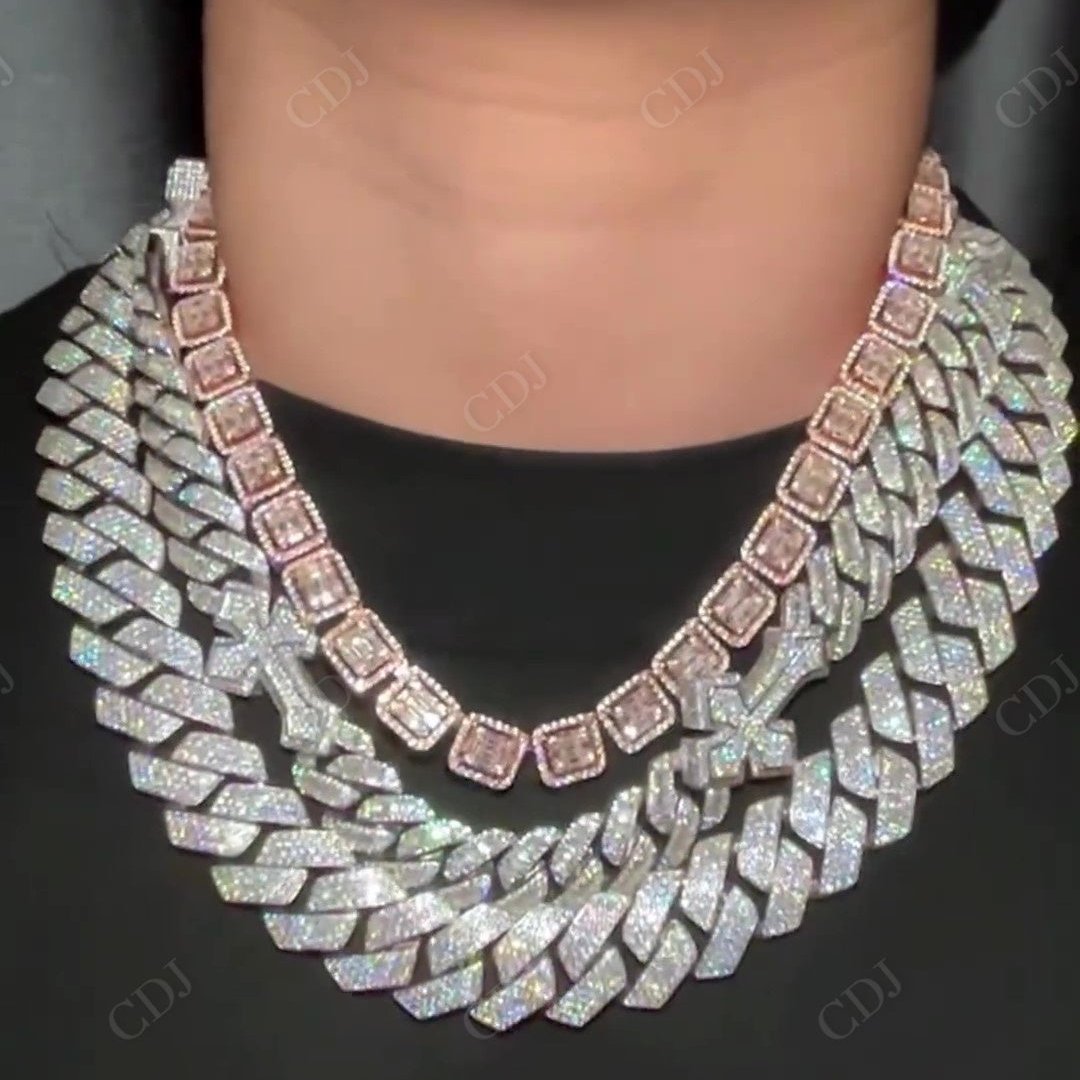
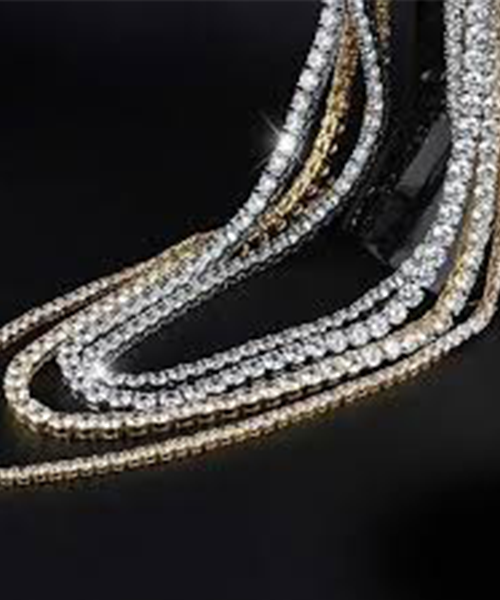
Iced Diamond Tennis Chain
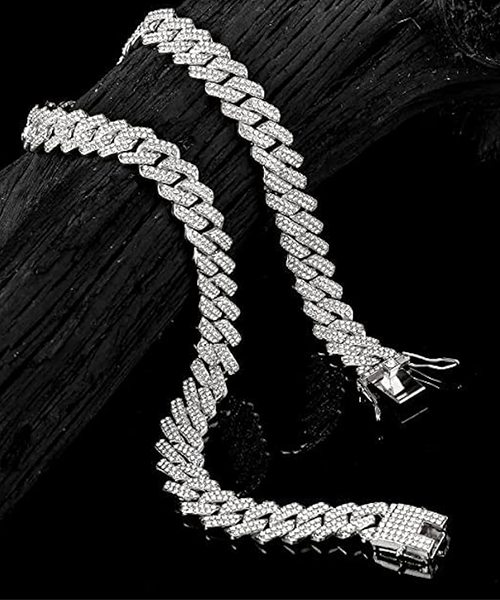
Volume sweet spot tennis chain. Round brilliant VVS-D moissanite, 4-prong setting, solid 14K gold construction. Bestseller across all US wholesale markets.
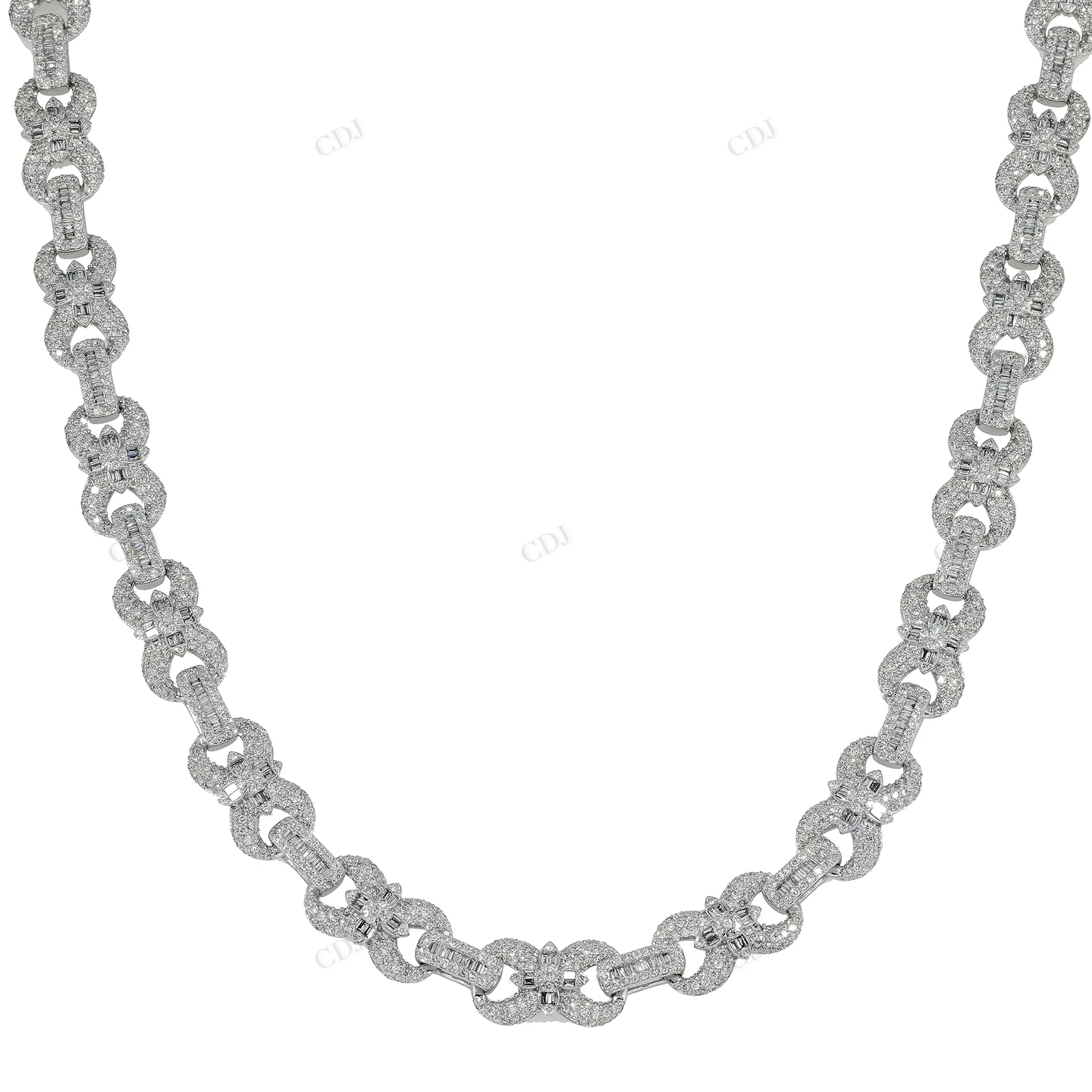
Round & Baguette Premium Tennis
Alternating round and baguette stone arrangement. Premium tier piece for Beverly Hills and Manhattan luxury showroom inventory.
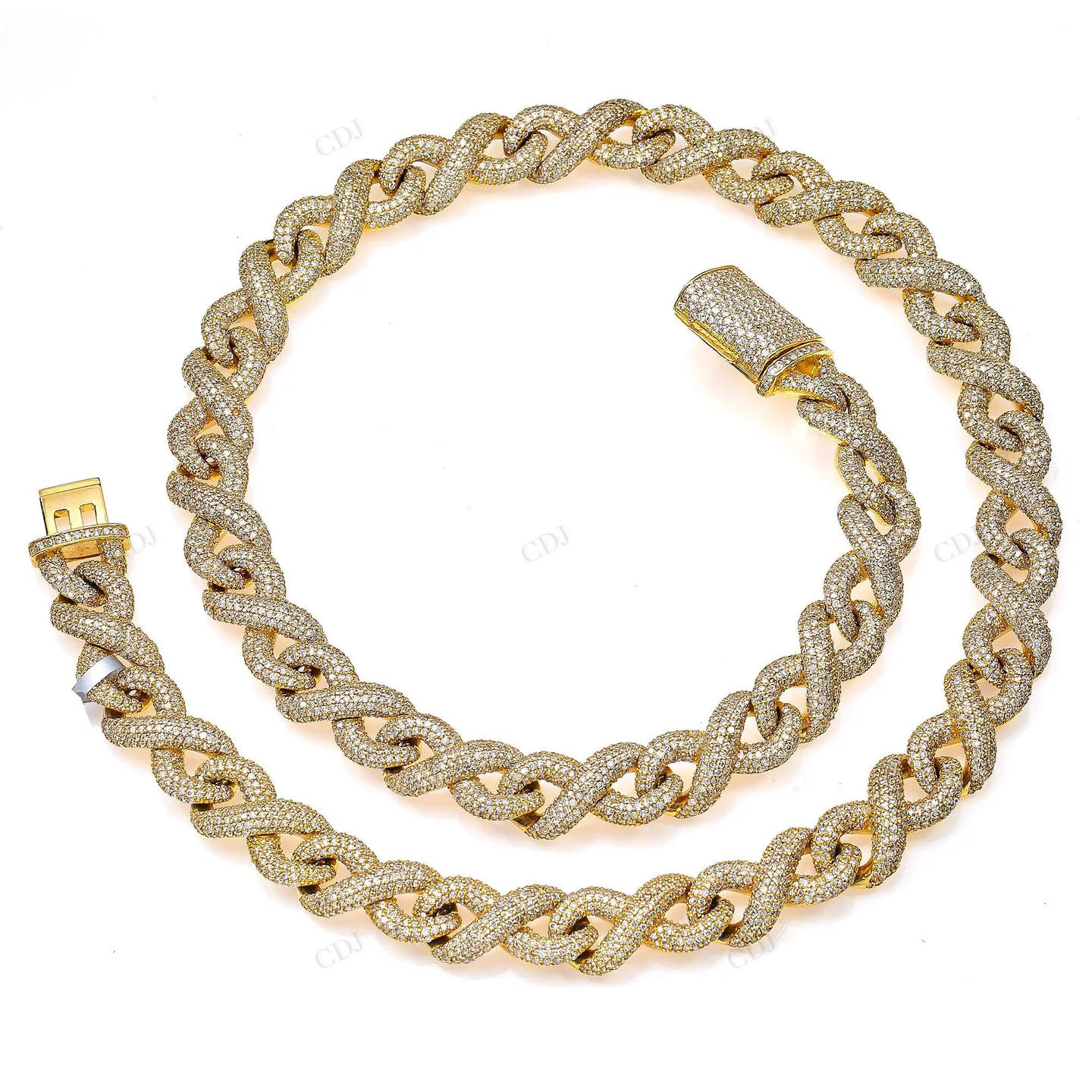
19.50 CTW Moissanite Tennis
Maximum carat density tennis chain at accessible wholesale pricing. Vegas Strip retail and music industry styling team favorite.
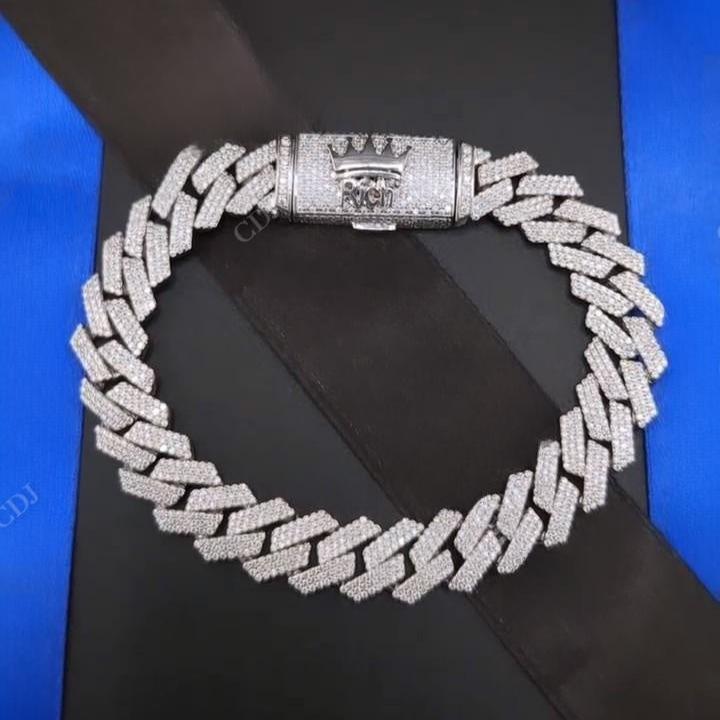
Iced Tennis Bracelet
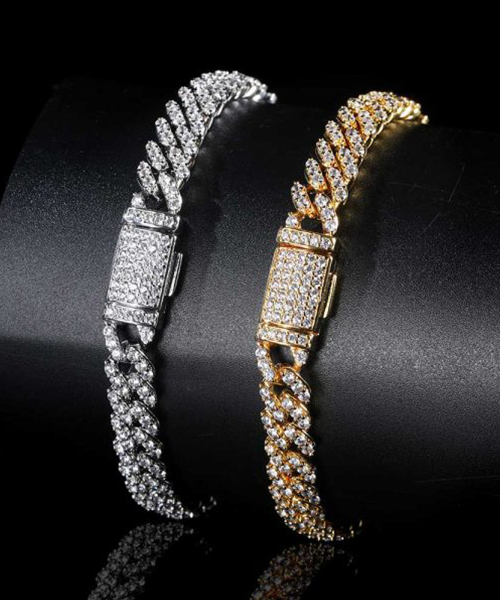
Companion bracelet to tennis chain inventory. Pairs naturally for matched-set styling. Top gift season seller for suburban retail.
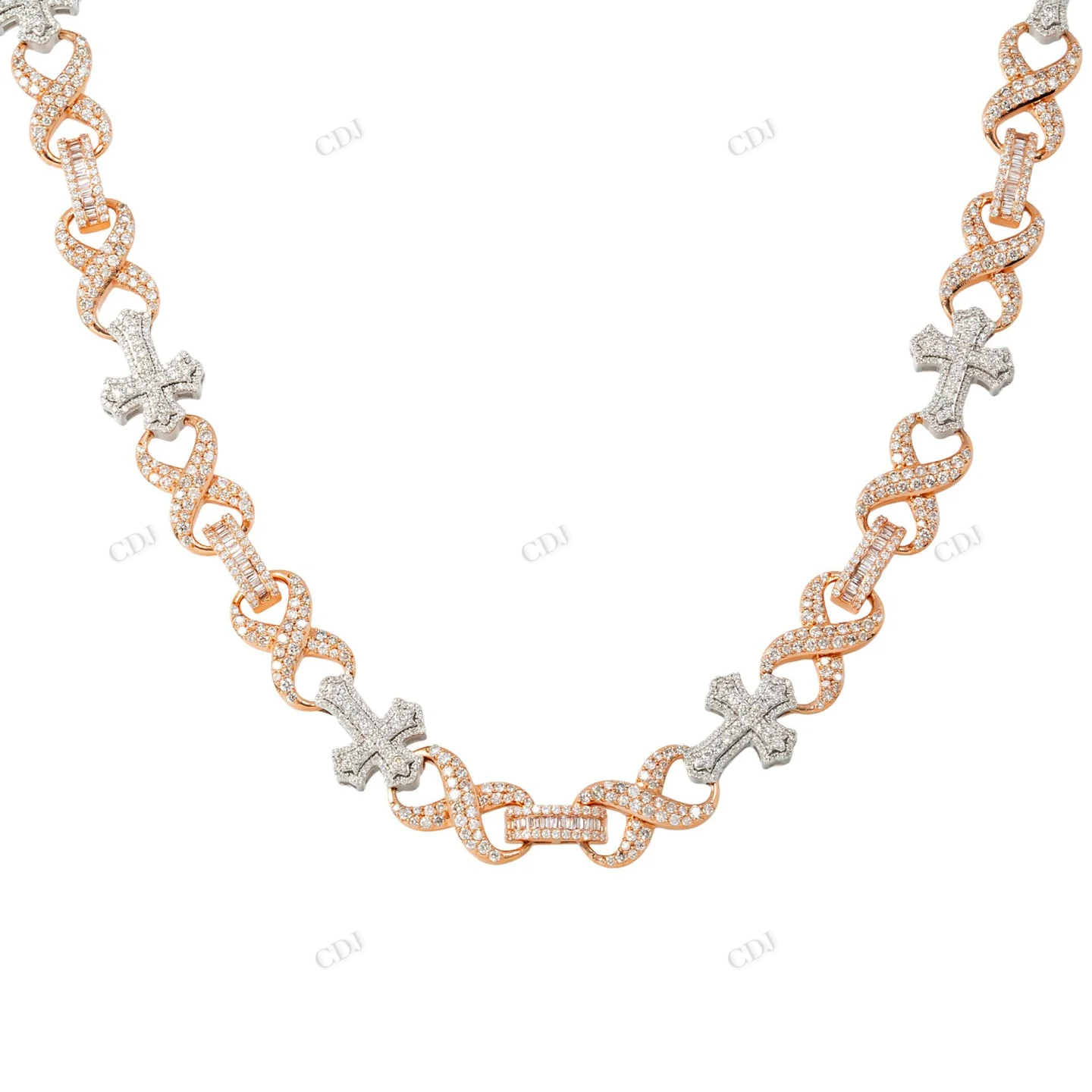
Two Tone Tennis with Cross
Tennis chain with integrated cross pendant in two-tone construction. Religious crossover piece dominant in suburban retail markets.
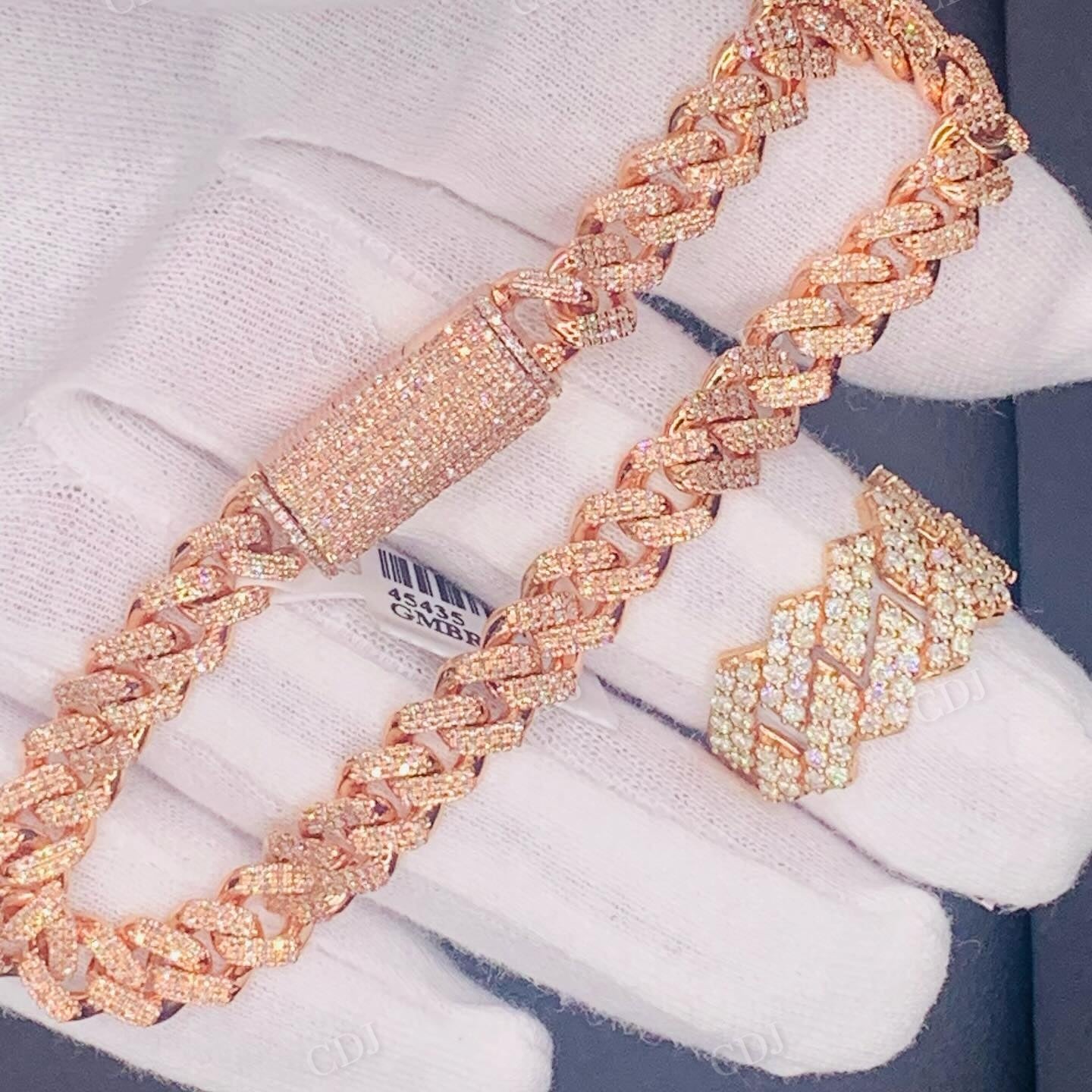
VVS Rose Gold Tennis
Solid rose gold tennis chain with D-color VVS moissanite. Premium piece for fashion-forward Beverly Hills and Soho luxury inventory.
20 Critical Tennis Chain Wholesale Buyer Questions
What is a tennis chain and where did the name come from?
A tennis chain is a continuous diamond or moissanite chain featuring uniformly-sized stones individually set in a flexible metal framework, creating an unbroken line of brilliance around the neck. The name traces to American tennis star Chris Evert—when her diamond line bracelet broke during the 1987 US Open and she paused the match to find it, the media began calling diamond line bracelets "tennis bracelets." The name extended to necklaces of the same design, which became known as tennis chains. Hip hop adopted tennis chains throughout the 1990s and 2000s, with artists layering them alongside heavier Cuban chains for contrast, establishing the category as a foundational hip hop jewelry piece. Today, tennis chains represent approximately 22-26% of total wholesale hip hop jewelry volume in the US market.
What are the standard tennis chain widths available wholesale?
Standard wholesale tennis chain widths range from 2mm to 10mm, with the 3mm to 6mm range representing approximately 78% of US wholesale volume. The 2mm-3mm widths target women's fashion, layering, and entry-level markets at $200-600 retail. The 4mm-5mm widths dominate daily-wear hip hop styling at $800-2,400 retail—the volume sweet spot. The 6mm-7mm widths cover premium statement pieces at $2,500-5,500 retail. The 8mm-10mm widths concentrate in music industry styling and luxury showroom inventory at $5,500-15,000+ retail. Carat weight scales proportionally with width: 3mm chains run 8-12 CTW, 5mm chains run 15-22 CTW, 7mm chains run 24-32 CTW, and 10mm chains run 38-52 CTW at 22-inch lengths.
What stone cuts are used in wholesale tennis chains?
Four stone cuts dominate wholesale tennis chain production in 2026. Round brilliant cut leads the market at approximately 65-70% of wholesale volume due to maximum brilliance from 58 facets and the cut's compatibility with high-volume production. Baguette cut accounts for 18-22% of wholesale, creating a modern geometric architectural appearance preferred by Gen Z buyers. Emerald cut covers 8-10% of premium wholesale, producing the distinctive hall-of-mirrors broad flash for luxury showroom inventory. Princess cut represents 3-5% of wholesale, offering a square modern aesthetic with sharp corners. Marquise and pear cuts remain niche at under 2% combined, used primarily for custom commissions and signature designer pieces.
How much does a wholesale tennis chain cost in 2026?
Wholesale tennis chain pricing in 2026 ranges from $185 per piece for 3mm 925 silver moissanite chains to $25,000+ per piece for 10mm 14K solid gold lab diamond pieces. The dominant wholesale sweet spot sits at $480-1,800 per piece for 4mm-6mm widths in VVS moissanite, which represents the volume retail segment from $1,200-4,500. A 5mm 14K gold VVS-D moissanite tennis chain at 22 inches runs $1,200-1,800 wholesale, while the same chain in VVS-EF lab diamond runs $5,500-8,200 wholesale. Volume discounts of 8-12% activate at 50+ pieces, 15-22% at 200+ pieces, and 25-32% at 500+ pieces monthly. Gold prices reaching record highs in 2026 increased solid gold pricing approximately 18% year-over-year.
What's the difference between 4-prong, bezel, and channel setting?
Three setting methods dominate wholesale tennis chains. Four-prong setting uses four small gold prongs to hold each stone, providing maximum stone visibility and brilliance while allowing light to enter from multiple angles—this accounts for approximately 60% of wholesale tennis chain production. Bezel setting surrounds each stone with a continuous gold edge, providing maximum security and a clean modern aesthetic, accounting for 25% of wholesale especially for daily-wear pieces. Channel setting holds stones in linear gold channels without individual prongs, creating a sleek streamlined look at 12% of wholesale volume. Three-prong setting remains a specialty option at 3% used primarily for delicate women's pieces requiring minimal metal visibility.
Which is better for tennis chains: moissanite or lab diamond?
Both stones work excellently for tennis chains, with selection driven by retail price point rather than quality. VVS moissanite leads tennis chain wholesale at 60-65% market share due to optimal price-to-brilliance economics—moissanite actually has higher refractive index (2.65 vs 2.42) and dispersion (0.104 vs 0.044) than diamond, throwing more rainbow fire under bright lighting conditions like stage lights and camera flashes. Lab-grown diamond accounts for 20-25% of wholesale, particularly for premium tier pieces above $3,000 retail where buyers expect certified stones and traditional diamond appearance. Premium CZ covers 12-15% of budget tier production under $500 retail. The 12-15% drop in lab diamond wholesale prices in 2026 has expanded lab diamond market share at the premium tier.
What's the MOQ for wholesale tennis chain orders?
Standard MOQ for wholesale tennis chains across US manufacturers in 2026 is 10 pieces for stock items including standard widths in standard lengths with VVS moissanite or lab diamond stones. Custom specifications—non-standard widths, longer lengths, specialty stones, or branded packaging—typically require 5-piece MOQ minimums per variation. Private label tennis chain production with branded boxes, hang tags, and certificates starts at 50 pieces per SKU for white label using existing molds and 100 pieces per SKU for fully exclusive private label designs. Volume pricing tiers activate at 50 pieces (8-12% off), 200 pieces (15-22% off), and 500+ pieces monthly (25-32% off). Net-30 payment terms typically open after the third successful order with established wholesale relationships.
How long does wholesale tennis chain production take?
Standard wholesale tennis chain production times range from 7 to 21 business days in 2026 depending on specifications. Stock-width pieces in standard 4mm-6mm widths with round brilliant moissanite stones ship in 7-12 business days from order confirmation. Baguette and emerald cut variants add 3-5 days due to more complex stone setting. Custom widths or lengths add 5-10 days. Solid 14K gold construction in widths over 7mm adds 3-5 days. Bulk orders over 50 pieces typically add 3-5 days. Rush production at 25% premium can compress timelines to 5 days for stock pieces and 10 days for custom configurations—available for music video deadlines, JCK trade show season, and award show styling commitments.
Which US cities have the highest demand for wholesale tennis chains?
Tennis chain wholesale demand concentrates differently than Cuban link demand. Los Angeles leads with the highest concentration of music industry styling teams, music video productions, and entertainment industry buyers requiring 3mm-7mm tennis chains for layering and statement looks. New York follows through Diamond District wholesale infrastructure serving Madison Avenue luxury and Brooklyn streetwear buyers. Miami runs third with strong demand for 4mm-6mm chains paired with Cuban links for the classic Latin trap stacking aesthetic. Atlanta concentrates on 4mm-5mm tennis chains paired with custom trap-aesthetic pendants. Las Vegas peaks during JCK trade show season. Chicago, Houston, and Dallas show steady wholesale demand at 3mm-5mm widths for daily-wear retail markets.
How do music video styling teams buy tennis chains wholesale?
Music video styling teams buy wholesale tennis chains through three primary channels in 2026. First, direct manufacturer relationships with custom production capability for music video styling deadlines—typically requiring rush production and exclusive designs not available to general retailers. Second, Los Angeles wholesale showrooms in the Jewelry District (Hill Street area) that stock pre-made inventory for same-day styling team purchases. Third, NYC Diamond District for East Coast productions requiring premium lab diamond pieces with certification documentation. Music video usage drives roughly 8-12% of total US tennis chain wholesale volume, peaking during awards show season (January-March) and album release cycles. Styling teams typically prefer 5mm-8mm widths with VVS-D moissanite for camera brilliance and 14K-18K white gold settings for cool-tone styling versatility.
What gold karat is best for tennis chains?
14K gold dominates wholesale tennis chains at approximately 60-65% of market volume due to optimal balance of color saturation, durability, and price point for the typical 4mm-7mm wholesale sweet spot. 14K provides the warm yellow color buyers expect from quality gold jewelry while maintaining sufficient hardness to secure prong settings against daily-wear stress. 10K gold accounts for 18-22% of wholesale, primarily in budget tier and street retail markets where harder metal extends chain longevity. 18K gold reserves 10-12% for luxury showroom inventory above $5,000 retail where richer color saturation justifies premium positioning despite slightly softer metal. White gold variations capture 15-20% across all karat options, particularly popular for moissanite tennis chains where the cool metal tone complements the stone's white brilliance. 925 sterling silver tennis chains with heavy gold plating represent 8-10% of accessible retail tier under $500.
What's the difference between single-row and multi-row tennis chains?
Single-row tennis chains feature one continuous line of stones representing approximately 88% of wholesale volume—the classic style that defines the category. Double-row and triple-row tennis chains feature parallel stone rows creating wider visual coverage at higher carat weights, accounting for 10% and 2% of wholesale volume respectively. Multi-row construction increases wholesale cost proportionally: a double-row tennis chain typically costs 2.2x-2.5x the single-row equivalent in the same width and stone grade, while triple-row chains run 3.2x-3.8x single-row pricing. Multi-row tennis chains target premium statement pieces and music industry styling where maximum stone visibility matters. Solid gold construction is required for multi-row chains over 6mm total width due to weight distribution requirements that hollow construction cannot reliably support.
How do I evaluate tennis chain quality before buying wholesale?
Evaluate wholesale tennis chain quality across six critical dimensions. First, verify gold karat markings stamped on the clasp (10K, 14K, 18K, 925). Second, test prong security by gently probing each stone with a steel pick—none should move under light pressure, indicating proper setting. Third, examine stone consistency: every stone should appear identical in size, color, and clarity with no visible variations. Fourth, check stone alignment—all stones should sit at consistent depth and angle within their settings without tilting. Fifth, verify clasp function and security by opening/closing 10 times and applying moderate stress. Sixth, inspect overall finishing with no rough edges, no visible casting marks, mirror polish on metal, and uniform stone setting throughout. Always order samples before bulk commitments to verify these standards in person.
What length should I order for wholesale tennis chains?
Wholesale tennis chain lengths follow established US market standards in 2026. The 18-inch length serves women's neck size and layering applications, representing approximately 15% of wholesale volume. The 20-inch length serves moderate-sized men's necks and shorter styling, at 25% of wholesale. The 22-inch length is the dominant US wholesale standard at 40% of orders—the length most US retail customers expect. The 24-inch length serves larger men's necks and longer statement looks at 15% of wholesale. Lengths beyond 24 inches drop to 5% combined volume reserved for specialty rapper styling, large necks, and statement layering applications. Most successful wholesale inventory strategies stock 20-inch, 22-inch, and 24-inch lengths simultaneously rather than single-length inventory.
What's the cost breakdown of a wholesale tennis chain?
A typical 5mm 14K gold VVS-D moissanite tennis chain at 22 inches with 4-prong setting breaks down as follows in 2026 wholesale pricing. Stone setting labor (180-220 individually-set stones) represents 32-38% of total cost—the highest cost component, reflecting intensive manual labor required for tennis chain production. Gold weight (approximately 38-48 grams of 14K) represents 28-32% of cost at current gold prices. Stones themselves (VVS-D moissanite, 15-22 CTW total) represent 18-22% of cost. Casting, framework construction, and clasp represent 8-10% of cost. Quality control, polishing, and packaging represent 4-6% of cost. Net wholesale price runs $1,200-1,800 with manufacturer margins reflecting 22-30% gross profit. The setting labor percentage is significantly higher than Cuban link chains because tennis chains require more individual stone settings per inch.
Can I get custom-designed tennis chains made wholesale?
Yes. Custom-designed wholesale tennis chains accommodate width customization, stone cut variations, multi-row constructions, alternating stone patterns, and integrated pendant designs. Standard customization including non-standard widths or lengths works with existing setting molds, requiring 5-piece MOQ and 14-18 business day production. Custom stone cut combinations—alternating round and baguette, gradient sizing, color variations—require new mold creation at 10-piece MOQ and 18-25 day production. Brand-exclusive tennis chain designs with proprietary settings or signature features require fully custom CAD work, 25-50 piece MOQ depending on complexity, and 25-35 day production with sample approval workflow. Custom tennis chains typically cost 25-65% more than stock equivalents depending on complexity, with strongest economics activating at 50+ piece volumes.
How do I source tennis chains for my Shopify or Instagram brand?
Sourcing wholesale tennis chains for online brands follows a structured four-step process. First, define brand positioning across budget tier ($200-800 retail), mid-tier ($800-2,500 retail), or premium tier ($2,500+ retail)—this determines stone grade, gold karat, and width options that fit your margins. Second, identify 3-5 potential manufacturers offering direct B2B pricing and order sample pieces from each at sample-tier pricing. Third, evaluate samples against five criteria: stone setting consistency, prong security under stress, clasp reliability, overall finishing quality, and karat mark verification. Fourth, place initial production order at 50-piece volume to test fulfillment quality, packaging, and shipping reliability before scaling to larger commitments. Most successful Shopify tennis chain brands work with one primary manufacturer for stable supply and one backup supplier for capacity overflow during product launches.
What payment methods work best for wholesale tennis chain orders?
Wire transfer dominates wholesale tennis chain payments at approximately 52-58% of transactions, preferred for orders over $5,000 due to zero processing surcharge and 1-2 day clearance times. ACH transfer accounts for 18-22% of payments, ideal for repeat US-based wholesale buyers establishing ongoing supplier relationships. Zelle and instant bank-to-bank options capture 12-15% of smaller orders under $5,000. Business credit cards account for 6-9% of payments despite the typical 3% processing surcharge, used by smaller retailers needing financing flexibility for inventory building. Cryptocurrency adoption through USDT and USDC reached 5-10% by 2026, growing strongly with international and crypto-native brand segments. First-time wholesale relationships typically require 50% advance payment with the balance due before shipment, opening to net-30 terms after the third successful order with payment history.
How do I avoid fake or low-quality tennis chain manufacturers?
Avoid fake or low-quality tennis chain manufacturers using five evaluation criteria. First, require sample orders before bulk commitments—legitimate manufacturers welcome sample requests at sample-tier pricing. Second, verify gold karat marks through independent acid testing on samples (test kits cost under $20). Third, check supplier business legitimacy through registration documents, physical workshop address verification via Google Maps Street View, and Google Business Profile presence with current photos. Fourth, request stone certification for premium pieces (GIA, IGI for lab diamonds; GRA for moissanite). Fifth, review supplier social media for production photos showing actual workshop operations rather than generic stock photography. Avoid suppliers requesting full payment upfront, refusing samples, lacking verifiable business presence, or offering prices significantly below market norms—these indicators correlate strongly with counterfeit production or outright scams.
How do I take care of tennis chains for retail customers?
Tennis chain care guidance for retail customers covers four maintenance practices. First, daily wear care requires cleaning every 2-3 weeks with mild dish soap, warm water, and soft-bristle brush to remove skin oils and product residue that dulls stone brilliance. Second, periodic prong inspection annually for daily wearers and biannually for occasional wearers identifies any loose prongs requiring re-tightening before stone loss occurs. Third, storage practices keep tennis chains in individual soft pouches separated from harder jewelry pieces to prevent scratching of polished gold surfaces. Fourth, professional maintenance every 12-18 months includes ultrasonic cleaning, prong tightening, and clasp inspection from qualified jewelers. Provide retail customers with care cards detailing these practices to extend chain longevity and reduce warranty claims, particularly for daily-wear pieces in the 4mm-6mm volume retail segment.
Ready to Source Wholesale Tennis Chains?
Apply this complete buyer's guide framework to your sourcing process. Send us your specifications—width, stone cut, stone grade, setting method, metal karat, quantity, and target retail price point. We respond within 4 hours with quotes, samples, and complete supplier evaluation documentation.