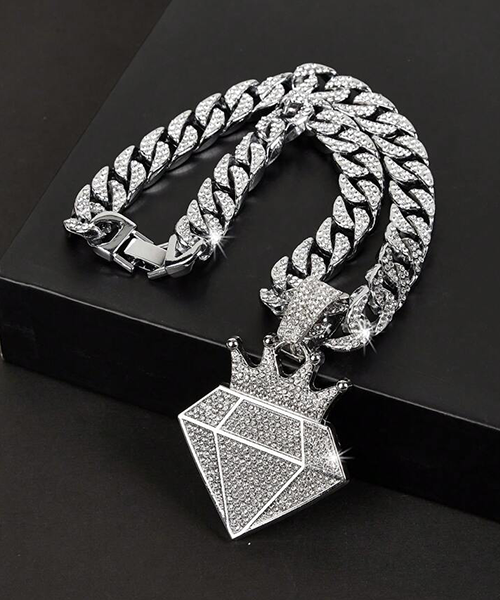
Custom Hip Hop Pendant Wholesale Manufacturing Guide 2026: CAD Design to Delivery
Custom Hip Hop Pendant Wholesale Manufacturing Guide
The definitive 9,700-word resource covering custom hip hop pendant manufacturing from CAD design through lost-wax casting, stone setting, finishing, and delivery. Pricing tiers, MOQ structures, design-to-delivery timelines, music industry custom pendant intelligence, and complete supplier evaluation framework for the 2026 US wholesale market. Built for jewelers, brands, styling teams, and B2B buyers.
📋 Table of Contents
- 01.Custom Pendant Industry Overview
- 02.7 Types of Custom Hip Hop Pendants
- 03.Pendant Size Visual Guide
- 04.CAD Design Process Explained
- 05.Lost-Wax Casting Process
- 06.Stone Setting Methods
- 07.Metal & Karat Selection
- 08.Stone Grade Selection
- 09.Bail Types & Chain Pairing
- 10.2026 Wholesale Pricing
- 11.Design-to-Delivery Timeline
- 12.Music Industry Custom Pendants
- 13.8-Step Custom Order Process
- 14.Best-Selling Custom Categories
- 15.Care & Maintenance Standards
- 16.20 Critical Buyer Questions
Custom Hip Hop Pendant Industry Overview
Custom hip hop pendants represent the fastest-growing category in the US hip hop jewelry wholesale market in 2026, with category volume growing approximately 25-30% year-over-year compared to 5-9% growth for stock chain categories. The custom pendant segment accounts for roughly 18-22% of total hip hop jewelry wholesale revenue but generates 30-35% of industry gross profit due to higher margin structures, premium pricing tolerance, and emotional purchasing dynamics that justify above-market valuations.
The custom pendant category encompasses every pendant produced through bespoke CAD design and individual manufacturing for a specific buyer, distinguished from stock pendants produced in volume runs from established molds. Custom pendants serve five primary buyer segments: individual end consumers commissioning personal pieces, music industry styling teams sourcing for artists, brand owners developing signature collections, custom shops building one-off commissions for retail customers, and jewelry brands launching exclusive product lines. Each segment has distinct ordering patterns, price tolerance, and quality expectations affecting supplier positioning.
2026 Custom Pendant Market Dynamics
Three forces define the 2026 custom hip hop pendant market. First, the dramatic expansion of social media and short-form video (TikTok, Instagram Reels, YouTube Shorts) created visual demand for unique signature pieces that mass-produced jewelry cannot satisfy—every viral hip hop content creator wants distinctive pendant identity. Second, the moissanite revolution made fully-iced custom pendants accessible to mid-market buyers at $800-3,000 price points that previously required $5,000+ for comparable diamond visual appearance. Third, advances in CAD design software, 3D printing technology, and digital communication infrastructure compressed custom pendant production timelines from 60-90 days a decade ago to 18-45 days standard in 2026.
The custom hip hop pendant supply chain in 2026 operates across three primary geographic hubs. The NYC Diamond District (47th Street area) concentrates premium custom pendant production for Madison Avenue luxury and East Coast music industry styling teams, with strong specialization in lab diamond ice-out pieces above $3,000 retail. Los Angeles Jewelry District (Hill Street area) focuses on music industry custom pendant production with rush capability for music video styling deadlines and award show season production. Atlanta and Miami workshops specialize in trap-aesthetic custom pendants serving regional music industry styling and Southern hip hop retail markets.
Custom pendants generate 40-60% higher gross margins than stock chains across the hip hop jewelry category, making them the most profitable single product line for retailers and brand owners building wholesale relationships.
7 Types of Custom Hip Hop Pendants
Custom hip hop pendant categories follow established taxonomy with seven primary types representing different design approaches, buyer demographics, and price tolerance levels. Understanding these categories helps wholesale buyers position inventory, market services, and identify highest-margin opportunities in their specific markets.
1. Letter & Name Pendants (22% of Custom Volume)
Letter, initial, name, and word pendants lead custom pendant volume at approximately 22% of US wholesale custom pendant production. Single letters serve as personal initial pieces, multi-letter combinations create names or signature words, and complete word pendants spell out concepts, dates, or personalized messages. Letter pendant designs range from simple block lettering to elaborate cursive script, gothic blackletter, custom calligraphy, and three-dimensional architectural lettering. Wholesale pricing typically runs $480-2,800 for letter pendants depending on size, complexity, and stone setting density. Letter pendants represent the entry-level custom segment driving highest order frequency.
2. Religious Pendants (18% of Custom Volume)
Religious custom pendants account for 18% of US wholesale custom production, dominated by Christian iconography (crosses, Jesus pieces, Virgin Mary representations, saint depictions) but also serving Jewish (Star of David, mezuzah, chai), Muslim (calligraphy, Allah symbols), Hindu (Om, deity representations), and Buddhist (Buddha, lotus) markets. Custom religious pendants integrate hip hop aesthetic with sacred meaning, creating signature pieces that combine cultural expression with religious significance. Wholesale pricing for custom religious pendants typically runs $680-4,500 reflecting larger sizes and complex iconographic detail. The category shows particularly strong year-over-year growth as religious expression becomes increasingly central to hip hop identity.
3. Tribute & Memorial Pendants (14% of Custom Volume)
Tribute and memorial custom pendants honor deceased family members, mentors, or significant individuals through photo-realistic facial reproductions, symbolic representations, or signature element capture. Memorial pendants represent the highest emotional purchasing dynamic in custom pendant work—buyers tolerate premium pricing and extended timelines for pieces honoring loved ones. Wholesale pricing runs $850-8,500 reflecting complexity of facial reproduction work or symbolic detail. The category requires specialized CAD capability for photo-to-3D conversion and skilled stone setting for realistic facial features. Music industry tribute pendants for deceased artists drive significant high-end custom pendant volume.
4. Brand & Logo Pendants (12% of Custom Volume)
Brand logo and corporate identity custom pendants represent 12% of US wholesale custom pendant production, serving businesses launching signature jewelry collections, music labels creating artist branding, personal brand identity pieces, and entrepreneurial custom commissions. Brand pendant projects require vector logo files converted to appropriate 3D pendant designs. Wholesale pricing runs $580-3,800 with strong volume economics activating at 25+ piece commitments where CAD design costs amortize favorably.
5. Animal & Creature Pendants (11% of Custom Volume)
Animal and creature custom pendants include signature designs like lions, gorillas, eagles, wolves, tigers, dragons, and custom creature commissions representing 11% of US wholesale custom production. Animal pendants combine cultural symbolism (strength, courage, leadership) with distinctive visual identity. Wholesale pricing runs $780-6,800 reflecting three-dimensional sculptural complexity and intricate stone-setting requirements for realistic creature representation.
6. Numeric & Date Pendants (9% of Custom Volume)
Numeric and date custom pendants commemorate significant numbers, years, addresses, birthdays, anniversaries, sports jersey numbers, or culturally significant figures. The category accounts for 9% of US wholesale custom pendant production with wholesale pricing typically $420-2,400 reflecting simpler geometric construction than other categories.
7. Specialty Character Pendants (8% of Custom Volume)
Specialty character custom pendants reference gaming culture, anime, sports figures, entertainment characters, and pop culture iconography representing 8% of US wholesale custom production. These commissions require specialized intellectual property awareness as character representations may involve trademark considerations. Wholesale pricing typically runs $620-4,200. The remaining 6% of custom pendant volume distributes across unique one-off commissions defying standard category classification—custom architectural pendants, conceptual art pieces, and entirely original designs.
Custom Pendant Size Visual Guide
Pendant size selection dramatically affects retail pricing, chain pairing requirements, customer demographic targeting, and visual impact. Custom hip hop pendants range from delicate 20mm layering pieces to massive 120mm music video statement pieces, with each size tier serving distinct buyer segments. Understanding size selection helps wholesale buyers position inventory and educate retail customers about appropriate sizing for their use cases.
Custom Pendant Size Visual Comparison
Pendant Size to Chain Width Pairing Standards
| Pendant Height | Pendant Category | Chain Width Pairing | Target Buyer | Wholesale Range |
|---|---|---|---|---|
| 20-30mm | Small layering | 3-6mm Cuban / 2-4mm Tennis | Women / Layering | $380-980 |
| 35-45mm | Medium standard | 6-10mm Cuban / 4-6mm Tennis | Standard hip hop | $680-1,800 |
| 50-60mm | Popular sweet spot | 8-14mm Cuban / 5-7mm Tennis | Volume retail | $1,200-2,800 |
| 65-80mm | Statement premium | 12-18mm Cuban / 6-8mm Tennis | Premium hip hop | $2,400-5,800 |
| 85-100mm | Music industry | 15-22mm Cuban / 7-10mm Tennis | Music video / styling | $5,000-15,000 |
| 105-120mm | XL signature | 20-30mm Cuban / 10mm+ Tennis | Luxury / iconic | $15,000-50,000+ |
CAD Design Process Explained
CAD (Computer-Aided Design) forms the foundation of modern custom pendant manufacturing, replacing the manual wax-carving methods that dominated jewelry production for centuries. CAD design enables precise dimensional accuracy, faster client review through digital renders, simpler revision workflow, and reliable scaling from one-off pieces to volume orders. Understanding the CAD design process helps wholesale buyers communicate effectively with manufacturers and evaluate design quality before committing to production.
The Six Phases of CAD Pendant Design
Phase 1: Design Brief Collection (Day 1)
The CAD process begins with comprehensive design brief collection. Buyers provide reference images, sketches, written descriptions, sizing requirements, style direction, target retail price point, and intended chain pairing. Detailed briefs accelerate the entire design process and reduce revision cycles. Standard brief elements include: pendant dimensions in millimeters (height x width x depth), metal preference with karat, stone type and grade with intended density (basic, moderate, fully iced), setting style preference, bail style, branding requirements, target delivery date, and quantity needed.
Phase 2: Initial CAD Construction (Days 2-4)
CAD specialists use jewelry-specific software like Matrix, RhinoGold, JewelCAD, or 3Design to construct the three-dimensional digital model. The construction phase typically takes 4-12 working hours depending on complexity. Simple letter pendants complete in 4-6 hours, while complex multi-layer designs with intricate stone setting plans require 10-16 hours. The CAD designer constructs the model in technical 3D modeling software with attention to wall thickness for structural integrity, undercuts for casting feasibility, stone setting cavity precision, and bail attachment strength relative to anticipated chain weight.
Phase 3: 360-Degree Render Generation (Day 4-5)
Once the CAD model is complete, the designer generates photorealistic 360-degree renders showing the pendant from all angles. Standard render packages include: front view, back view, side profile, three-quarter angle views, top-down view, close-up detail shots of intricate areas, scale comparison against standard chain widths, and worn position simulation. High-quality renders display realistic metal coloration, accurate stone brilliance simulation, proper proportional relationships, and shadow rendering that approximates actual physical appearance. Render generation takes 2-6 hours depending on complexity and render quality settings.
Phase 4: Client Review and Revision (Days 5-7)
The buyer reviews the 360-degree renders and requests modifications. Standard revisions include: size adjustments (typically ±2-5mm in any dimension), proportional rebalancing, stone arrangement changes, bail style modifications, design element additions or removals, surface texture changes, and karat or metal color changes. Each revision round takes 1-3 business days to implement and re-render. Quality CAD relationships include 2-3 revision rounds within standard design fees. Additional revisions beyond the included rounds incur additional hourly charges typically $75-150 per revision round.
Phase 5: Final Approval and STL Export (Day 7-8)
Once the buyer approves the final CAD design, the file exports to STL format for 3D printer wax model production. STL (Stereolithography) is the standard file format read by jewelry-specific 3D printers. The export process includes adding support structure planning, calculating optimal printer orientation for surface quality, and verifying minimum wall thickness requirements throughout the design. The final CAD file becomes the official record of approved design specifications and serves as the basis for any future production runs of the same design.
Phase 6: Pre-Production File Verification (Day 8)
Before releasing the file to 3D printing, manufacturers perform final verification including: dimensional accuracy check against original brief, stone setting cavity verification for specified stone sizes, structural integrity analysis under expected chain weight stress, undercut analysis for casting feasibility, and surface area calculation for accurate metal weight estimation. This verification phase catches errors before they multiply through physical production. CAD design fees typically range $150-450 per pendant including all six phases, with complexity-based pricing reflecting design hours required.
Quality CAD design prevents 80-90% of production errors before they occur. Cutting CAD investment to save money typically multiplies costs 3-5x in production failures, revision rounds, and dissatisfied delivery outcomes.
Lost-Wax Casting Process
Lost-wax casting is the 6,000-year-old jewelry production method that remains the gold standard for custom hip hop pendant manufacturing in 2026. The process uses sacrificial wax models that are encased in plaster investment, burned away leaving precise cavities, then filled with molten precious metal. The result is dimensional accuracy and detail capture impossible with stamping, fabrication, or other alternative methods. Understanding the lost-wax casting process helps wholesale buyers communicate with manufacturers and evaluate production quality.
Lost-Wax Casting Process Flow
Phase-by-Phase Casting Detail
Phase 1: 3D Wax Model Printing
The approved CAD STL file feeds into a jewelry-specific 3D printer that builds the wax model layer-by-layer using photopolymer resin technology. Modern jewelry 3D printers achieve resolution as fine as 25-50 microns per layer, capturing intricate details impossible with traditional hand-carved wax models. Print time ranges 4-12 hours depending on pendant size and detail complexity. The completed wax model emerges identical to the approved CAD design within fractions of a millimeter accuracy.
Phase 2: Wax Tree Assembly
The wax model attaches to a central wax sprue (the "tree") that will eventually become the gold flow channel during casting. Multiple wax models can attach to a single tree for production efficiency, with each piece positioned for optimal metal flow during pouring. The tree assembly takes 30-60 minutes per casting batch. Sprue positioning requires skill—incorrect placement causes incomplete fills, porosity, or surface defects in the final cast piece.
Phase 3: Investment
The wax tree positions inside a steel flask, which fills with liquid plaster investment material that hardens completely surrounding the wax. The investment slurry mixes specific water-to-powder ratios for optimal strength and detail capture. Vacuum chambers remove air bubbles ensuring complete contact between wax and investment. The plaster cures over 8-12 hours before progressing to burnout.
Phase 4: Burnout
The invested flask enters a kiln cycled through specific temperature stages starting at 300°F and reaching 1,300°F-1,500°F over 8-12 hours. The wax model melts, then vaporizes completely, leaving a precise cavity in the plaster matching the original CAD design. Burnout cycle precision is critical—inadequate burnout leaves carbon residue causing casting defects, while excessive temperature damages plaster integrity. The empty flask exits the burnout cycle at controlled temperature ready for metal pour.
Phase 5: Metal Pour and Casting
Molten gold (or silver, platinum) at 1,800-2,200°F pours into the prepared flask cavity through vacuum-assisted, centrifugal, or pressure-injection methods. Modern jewelry casting machines use vacuum-pressure systems that pull molten metal into all areas of the cavity while pushing air out, ensuring complete fills without porosity. The pour itself takes 10-30 seconds but requires precise temperature control and timing to achieve quality results. The filled flask cools for 30-60 minutes before plaster removal.
Phase 6: Devesting and Finishing
Cooled flasks plunge into water, causing thermal shock that fractures the plaster investment away from the cast metal. The freshly cast pendant emerges raw, requiring sprue removal, surface cleanup, polishing, stone setting, and final finishing. The raw casting captures full design detail but requires 8-15 days of additional hand finishing work including: sprue removal and stub grinding, surface filing and pre-polish, stone setting cavity preparation, individual stone setting, final polish across all surfaces, and quality control inspection before packaging.
Stone Setting Methods for Custom Pendants
Stone setting is the most labor-intensive phase of custom pendant production, representing approximately 25-35% of total wholesale cost. Six primary setting methods dominate custom pendant production in 2026, with selection driven by design aesthetic, stone size and shape, retail price tier, and durability requirements.
Four-Prong Setting (40% of Custom Pendant Setting)
Four-prong setting dominates custom pendant stone setting at approximately 40% of wholesale custom pendant production. Four small gold prongs hold each stone with maximum visibility and brilliance, allowing light to enter the stone from multiple angles. Four-prong setting works for all stone sizes from 0.01ct to 1.0ct+ and accommodates round, princess, and similar geometric cuts. The method provides excellent stone security when prongs are properly sized and seated.
Pave Setting (30% of Custom Pendant Setting)
Pave setting represents 30% of custom pendant stone setting volume, particularly dominant in fully-iced custom pendants where many small stones (typically 0.005-0.05ct each) set close together separated by tiny gold beads create an ice-covered appearance with minimal visible metal between stones. Pave setting requires highest skill levels for proper bead formation, consistent stone heights, and uniform brilliance across the iced surface. Quality pave work transforms a custom pendant into a glittering iced piece commanding premium pricing.
Bezel Setting (12% of Custom Pendant Setting)
Bezel setting covers 12% of custom pendant stone setting, surrounding each stone with continuous gold edge providing maximum security and modern aesthetic. Bezel-set custom pendants work excellently for centerpiece stones in custom designs, focal point gemstones in religious or tribute pendants, and pieces where stone security matters more than maximum brilliance. The continuous gold edge slightly reduces stone visibility compared to prong settings but offers superior durability and contemporary visual appeal.
Channel Setting (8% of Custom Pendant Setting)
Channel setting accounts for 8% of custom pendant stone setting, used primarily for baguette or emerald cut stones arranged in linear configurations within custom designs. The setting method holds stones in gold channels without individual prongs visible, creating sleek streamlined appearance with stones flowing continuously along the channel path. Channel setting works particularly well for letter pendants featuring stone-set tracks along letter forms.
Bead Setting (6% of Custom Pendant Setting)
Bead setting covers 6% of custom pendant stone setting, using tiny gold beads to hold small stones in cluster arrangements. The method enables flexible stone placement in irregular patterns following custom design contours where geometric setting methods cannot accommodate. Bead setting is particularly valuable for animal pendants, religious pieces, and complex custom designs requiring stones in non-linear arrangements.
Flush Setting / Gypsy Setting (4% of Custom Pendant Setting)
Flush (also called gypsy) setting represents 4% of custom pendant stone setting, with stones set into drilled cavities flush with the metal surface for a sleek modern aesthetic. The setting method works particularly well for letter pendants where stones embed within letter forms, signature pieces where stones accent metal designs without visual interruption, and minimalist custom pendants emphasizing metal surfaces over stone visibility. Flush setting requires precise drilling depth and stone seating to achieve true flush alignment.
Metal & Karat Selection for Custom Pendants
Metal selection profoundly affects custom pendant wholesale cost, retail positioning, durability, color saturation, and perceived value. Five primary metal options dominate custom pendant manufacturing in 2026, each serving different price tiers and customer segments.
14K Gold — 55-60% Market Share
14K gold dominates custom pendant wholesale at approximately 55-60% of market volume due to optimal balance of color saturation, durability for stone settings, and price point for the $500-5,000 retail range. The 58.3% pure gold content delivers warm yellow color buyers expect from quality gold jewelry while maintaining sufficient hardness to secure stone settings against daily-wear stress. 14K gold works for every custom pendant category—letter pendants, religious pieces, tribute pendants, brand logos, and signature designs across all sizes and complexity levels.
10K Gold — 18-22% Market Share
10K gold accounts for 18-22% of custom pendant wholesale, primarily in budget tier custom work and street retail markets where lower gold content (41.7% pure) reduces material cost while extending durability through harder alloy composition. 10K custom pendants enable accessible retail price points under $800 that solid 14K construction cannot match. The slightly paler yellow color compared to 14K is rarely distinguishable in side-by-side comparison without specific knowledge of what to look for. 10K offers the strongest value proposition for budget-conscious custom pendant buyers.
18K Gold — 12-15% Market Share
18K gold reserves 12-15% of custom pendant wholesale for luxury custom commissions above $3,500 retail. The 75% pure gold content delivers richest yellow color saturation possible, immediately signaling premium quality to discerning buyers. However, 18K's softness requires careful design considerations for stone settings and structural integrity—custom designers must specify thicker prongs, reinforced bail attachments, and protected stone settings to compensate for the softer metal. 18K custom pendants work best for occasional-wear luxury pieces and customers prioritizing visual quality over daily durability.
925 Sterling Silver with Gold Plating — 8-10% Market Share
925 sterling silver custom pendants with heavy gold plating (3-5 micron minimum) represent 8-10% of accessible retail tier under $400. Quality wholesale silver custom pendants use rhodium underlay before final gold plating for plating longevity and base metal isolation. Sterling silver custom pendants typically wholesale at 12-20% of equivalent solid 14K gold pricing, enabling retail price points under $400 that wouldn't be possible with solid gold construction. The category works well for fashion brands, tourist markets, and accessible online retail where authentic solid gold pricing doesn't fit margins.
Platinum and Palladium — Under 2% Combined
Solid platinum and palladium remain niche at under 2% combined custom pendant wholesale share, used primarily for ultra-luxury custom commissions where buyers specifically request white-metal alternatives to white gold. Platinum custom pendants offer naturally white color without plating requirements, exceptional density delivering substantial weight, and hypoallergenic properties for sensitive skin. Wholesale costs run 30-50% premium over equivalent 18K white gold reflecting metal density and processing complexity.
Stone Grade Selection
Stone selection on custom pendants follows similar principles to chain stone selection but with additional considerations for individual stone visibility, custom design integration, and retail price tier positioning. Four stone categories dominate wholesale custom pendant production in 2026.
VVS Moissanite (58-62% Market Share)
VVS-grade moissanite leads wholesale custom pendant production at approximately 58-62% of total stone usage. Moissanite delivers the highest brilliance-to-cost ratio in the jewelry industry, with refractive index of 2.65 versus diamond's 2.42 and dispersion of 0.104 versus diamond's 0.044. This means moissanite throws more fire and rainbow color than diamond under bright lighting—particularly important for hip hop pendants worn under stage lights, music video cameras, club lighting, and social media ring lights. Wholesale VVS-D moissanite custom pendants typically retail at 18-22% of equivalent VVS-EF lab diamond pendants while delivering visual brilliance customers consistently rate as equal or superior in blind testing.
VVS-EF Lab-Grown Diamond (22-26% Market Share)
VVS-EF lab-grown diamonds account for 22-26% of wholesale custom pendant production, particularly for premium tier pieces above $3,500 retail. Lab diamonds are chemically and physically identical to natural diamonds, certified by GIA, IGI, or HRD with full grading reports documenting cut, color, clarity, and carat weight. The 12-15% price drop in lab diamond wholesale costs through 2026 expanded their market share substantially in custom pendants where individual stone sizes (0.05-0.5 carat each typical) make lab diamond increasingly competitive against moissanite on absolute price terms. Lab diamond custom pendants offer classic white brilliance of natural diamonds, full certification documentation, and 10-30% secondary market resale value.
Premium AAAAA CZ (10-12% Market Share)
Premium cubic zirconia covers 10-12% of wholesale custom pendant production where ultra-low cost matters more than authenticity. High-quality AAAAA-grade CZ stones approximate moissanite's visual appearance at 30-50% of moissanite's wholesale cost. CZ custom pendants work for entry-level retail under $400, tourist markets, fashion-focused brands, and high-volume turnover inventory.
Natural Diamond (Under 2% Market Share)
Natural diamonds account for under 2% of wholesale custom pendant production in 2026—a significantly lower share than in chain production because custom pendants concentrate higher per-stone investment than chains where many small stones distribute cost. Natural diamond custom pendants primarily serve Beverly Hills, Manhattan, Bal Harbour, and similar ultra-luxury showrooms where customer expectations specifically require natural stone documentation for cultural or investment reasons.
Bail Types & Chain Pairing Standards
The pendant bail (the attachment loop connecting pendant to chain) significantly affects pendant aesthetics, structural integrity, and chain compatibility. Five primary bail types dominate custom pendant manufacturing, each serving different design styles and chain pairing requirements.
Standard Round Bail
Standard round bails feature a circular gold loop attached to the top of the pendant, providing universal compatibility with all chain widths. Round bails accommodate chain widths from 2mm tennis chains through 25mm Cuban links by sizing the bail diameter appropriately. Standard round bails work for approximately 60% of custom pendant production due to compatibility and simplicity. The bail interior diameter should measure approximately 1.5-2x the intended chain width to allow comfortable chain flow without binding.
Hidden Bail (Integrated)
Hidden bails integrate the attachment loop into the pendant design itself, eliminating visible bail hardware for cleaner aesthetic. Hidden bails work particularly well for letter pendants, religious pieces, and custom designs where visible bail hardware would interrupt design flow. Hidden bails account for approximately 22% of custom pendant production, particularly popular in premium custom work where design integrity matters.
Diamond/Iced Bail
Diamond or iced bails feature stone-set bails matching the pendant's iced finish, creating visual continuity between pendant and bail. Iced bails add $80-280 to wholesale pendant cost depending on stone grade and bail size. Approximately 12% of custom pendants feature iced bails, particularly in fully-iced pendants where standard plain bails would interrupt the iced visual flow.
Articulated Bail
Articulated bails feature movable joint construction allowing the pendant to swivel or hinge, creating dynamic visual movement on the chain. Articulated bails account for 4% of custom pendant production, primarily in premium custom work where movement adds design interest.
Custom Branded Bail
Custom branded bails incorporate logos, monograms, or signature elements into the bail itself, transforming a functional element into brand identity statement. Branded bails account for 2% of custom pendant production, used primarily in brand-exclusive custom collections and signature artist pieces.
2026 Custom Pendant Wholesale Pricing
Custom pendant wholesale pricing in 2026 reflects three major market forces: gold prices reaching record highs above $2,400 per ounce driving solid gold construction costs up 18-22% year-over-year, moissanite stone pricing remaining stable or declining 3-5% as production capacity expanded globally, and lab-grown diamond pricing dropping 12-15% creating new accessible premium tiers. For custom pendants specifically, the high CAD design and individual stone setting labor components make labor efficiency a critical pricing factor.
Custom Pendant Wholesale Pricing Matrix (June 2026)
| Size | Type | Metal | VVS Moissanite | Lab Diamond VVS-EF |
|---|---|---|---|---|
| 25-30mm | Letter / Small custom | 925 Silver + Plating | $180-380 | $420-680 |
| 25-30mm | Letter / Small custom | 10K Solid | $420-780 | $1,200-1,650 |
| 35-45mm | Medium custom | 14K Solid | $680-1,400 | $2,200-3,800 |
| 50-60mm | Standard hip hop | 14K Solid | $1,200-2,800 | $4,500-7,800 |
| 50-60mm | Standard hip hop | 18K Solid | $2,400-4,200 | $7,800-12,500 |
| 65-80mm | Statement premium | 14K Solid | $2,400-5,800 | $8,500-15,500 |
| 85-100mm | Music industry | 14K Solid | $5,000-12,000 | $18,000-32,000 |
| 105-120mm | XL signature | 14K Solid | $15,000-25,000 | $35,000-65,000 |
| 105-120mm | XL signature | 18K Solid | $25,000-50,000 | $50,000-100,000+ |
Custom Pendant Cost Breakdown
A typical 50mm custom letter pendant in 14K gold with VVS-D moissanite stone setting breaks down as follows in 2026 wholesale pricing. Stone setting labor (80-150 individually-set stones depending on design) represents 28-35% of total cost—the largest cost component reflecting intensive hand labor. Gold weight (typically 18-32 grams of 14K depending on size) represents 25-32% of cost at current gold prices. CAD design and 3D printing (amortized across order quantity) represents 8-15% of cost on first piece, dropping to 2-5% on volume orders. Stones themselves (VVS-D moissanite at 1.5-4 CTW total) represent 12-18% of cost. Casting and metal preparation represent 8-12% of cost. Finishing, polishing, and quality control represent 6-9% of cost. Branded packaging and certificates represent 2-4% of cost.
Custom Pendant Volume Discount Tiers
- Single Piece (Custom Commission): Full retail+ pricing, 100% advance payment, standard production queue, 18-35 day timeline
- Small Run (5-24 pieces): 5-10% off design fees per unit, 50% advance + 50% pre-shipment, standard production
- Standard Custom (25-99 pieces): 15-25% off total pricing, 30% advance + 70% pre-shipment, priority production lane
- Large Custom (100-499 pieces): 25-32% off total, Net-15 terms after third order, dedicated production line
- Brand Partner (500+ pieces/month): 35-42% off, Net-30 terms, account manager, dedicated production capacity
Design-to-Delivery Timeline
Custom pendant production timelines follow predictable patterns across distinct phases from initial inquiry through final delivery. Understanding the complete timeline helps wholesale buyers set realistic expectations with retail customers and plan inventory for time-sensitive applications including music video styling, award shows, and product launches.
Custom Pendant Design-to-Delivery Timeline
Rush Production Options
Rush production at 30% premium can compress timelines to 15-20 days for simple letter pendants and 22-28 days for standard custom designs. Rush production requires production lane prioritization, weekend shift overtime, expedited material procurement, and accelerated QC processes. Music video styling deadlines, award show season commitments, and album release cycles routinely require rush production capability. Established wholesale relationships gain priority access to rush production capacity over new buyer relationships during high-demand periods.
Music Industry Custom Pendants
The music industry custom pendant segment drives approximately 12-15% of total US custom pendant wholesale revenue but generates disproportionate cultural influence over consumer demand patterns. Music industry custom pendants establish trends that flow into retail demand 3-9 months later, creating predictable cultural waves that strategic wholesale buyers can position inventory ahead of.
Music Industry Custom Pendant Sourcing Channels
Music industry artists access custom hip hop pendants through three primary wholesale channels in 2026. First, direct manufacturer relationships through artist styling teams establish ongoing accounts for repeat custom pendant commissions—the dominant channel for established artists with consistent pendant needs. Second, Los Angeles wholesale showrooms in the Jewelry District (Hill Street area) offer in-person custom design consultations and rush production for music video styling deadlines from regional and traveling artists. Third, NYC Diamond District for East Coast artists requiring premium lab diamond pieces with certification documentation for high-end music video aesthetics.
2026 Music Industry Custom Pendant Trends
- Tribute Pendants Dominant: Memorial pendants honoring deceased artists, family members, and cultural figures lead music industry custom orders
- Religious Iconography Rising: Custom Jesus pieces, crosses, and faith-based pendants up 30-40% year-over-year
- Animal Symbol Resurgence: Lion, gorilla, eagle, and wolf pendants representing strength and cultural identity
- Letter Pendant Innovation: Custom name pendants with elaborate three-dimensional letter forms beyond simple block letters
- White Gold Preference: Cool metal tones complement white stone brilliance under stage and camera lighting
- VVS-D Moissanite Default: Higher dispersion creates more visible rainbow fire on camera than diamonds
- Multi-Element Compositions: Complex pendants combining multiple symbols, characters, or design elements in single pieces
Award Show Season Production Cycles
Award show season (January-March) drives the highest annual custom pendant wholesale spike. Grammy Awards, BET Awards, Iheart Radio Awards, MTV VMAs, and BET Hip Hop Awards all create concentrated styling team demand for fresh custom pendant inventory typically 6-12 weeks before broadcast dates. Wholesale buyers serving styling teams should reserve production capacity in October-December for award show season delivery. Album release cycles throughout the year create additional concentrated demand spikes—typically 4-6 weeks before major album drops, styling teams place custom pendant orders for press tour, music video styling, and red carpet appearances.
8-Step Custom Pendant Order Process
Successful custom pendant ordering follows a structured eight-step process designed to maximize delivery success and minimize specification errors. Following the complete process ensures buyer expectations align with manufacturer capabilities and final delivery meets requirements.
Define Pendant Concept and Reference Imagery
Collect reference images, sketches, or detailed descriptions of the pendant design. Specify size in millimeters, style direction, intended chain pairing, target retail customer demographic, and key design elements that must be included.
Submit Design Brief to Manufacturer
Provide complete specifications including dimensions, metal preference and karat, stone type and grade, setting style preference, bail style, branding requirements, MOQ needed, target delivery date, and any special considerations.
Review CAD Design and Approve
Manufacturer creates 3D CAD design and 360-degree renders within 4-6 business days. Carefully review proportions, stone placement, bail design, surface details, and overall aesthetic. Request revisions if needed before approval.
Pay Design Fee and 50% Production Deposit
CAD design typically costs $150-450 depending on complexity. Production deposit of 50% releases project to wax printing and casting phase. Final 50% balance due before shipment.
Wax Model 3D Printing and Approval
3D printer creates physical wax model from approved CAD file in 1-2 business days. Optional physical wax sample shipping available for hands-on approval before casting—adds 5-8 days but provides final verification opportunity.
Lost-Wax Casting Production
Wax model is invested in plaster, burned out leaving cavity, then filled with molten gold or silver. Cast pendant emerges raw, requiring cleanup, finishing, and preparation for stone setting—takes 3-5 business days.
Stone Setting and Finishing
Stones are set individually by hand using the approved setting method. Final polishing, plating if specified, and quality control inspection complete the production phase. Stone setting and finishing requires 8-15 business days depending on complexity.
Final Payment and Shipment
50% balance payment due before shipment authorization. Pendant ships via insured courier with photos of finished piece, certifications if applicable, care documentation, and branded packaging if specified.
Best-Selling Custom Pendant Configurations
Six representative best-selling custom pendant configurations from our 47th Street workshop, organized by category and target market segment. Each represents proven wholesale demand patterns with documented success across multiple US wholesale buyer relationships.
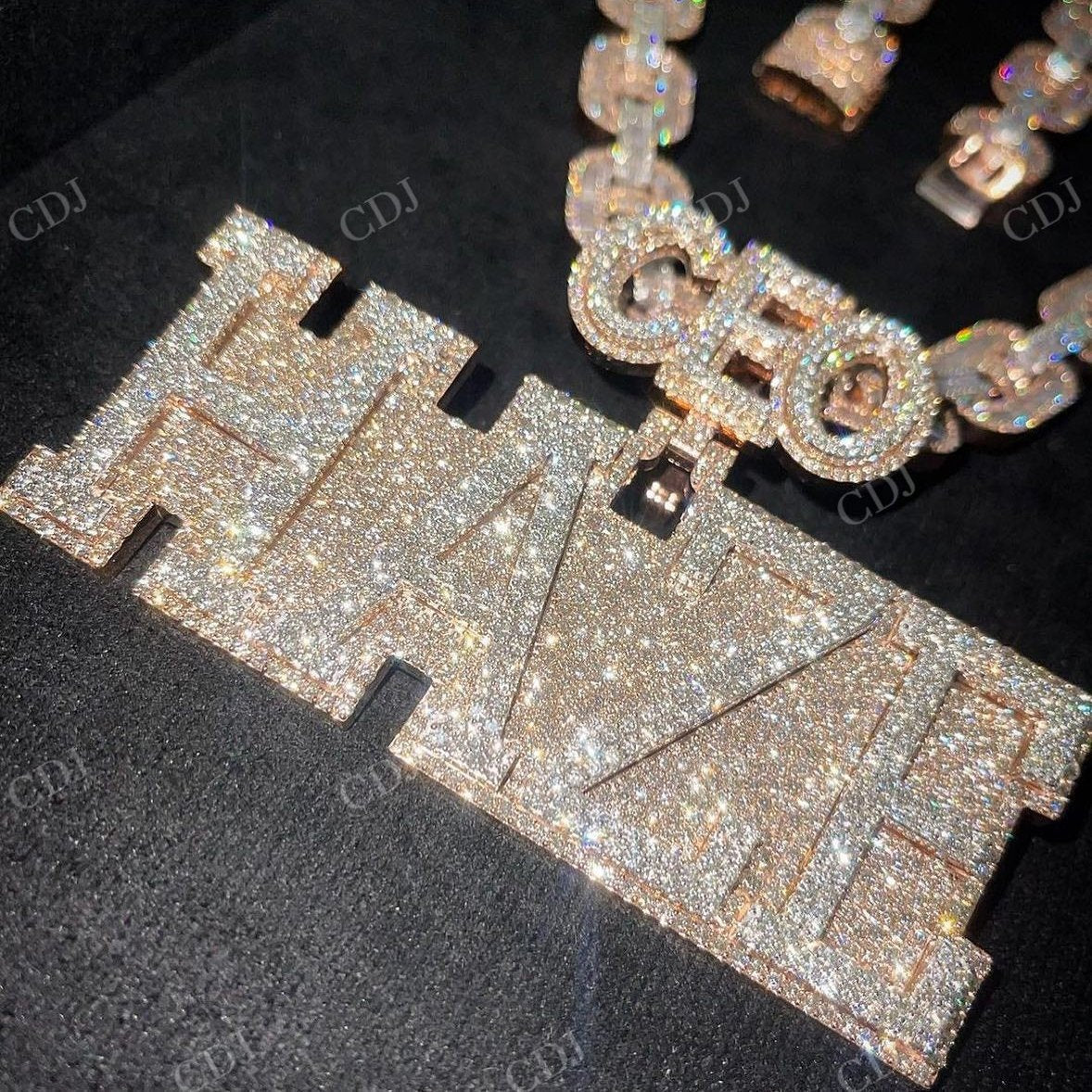
Custom Iced Name Pendant
Volume sweet spot custom pendant. Iced 14K gold letter or name pendant with VVS-D moissanite pave setting. Bestseller across all US wholesale markets.
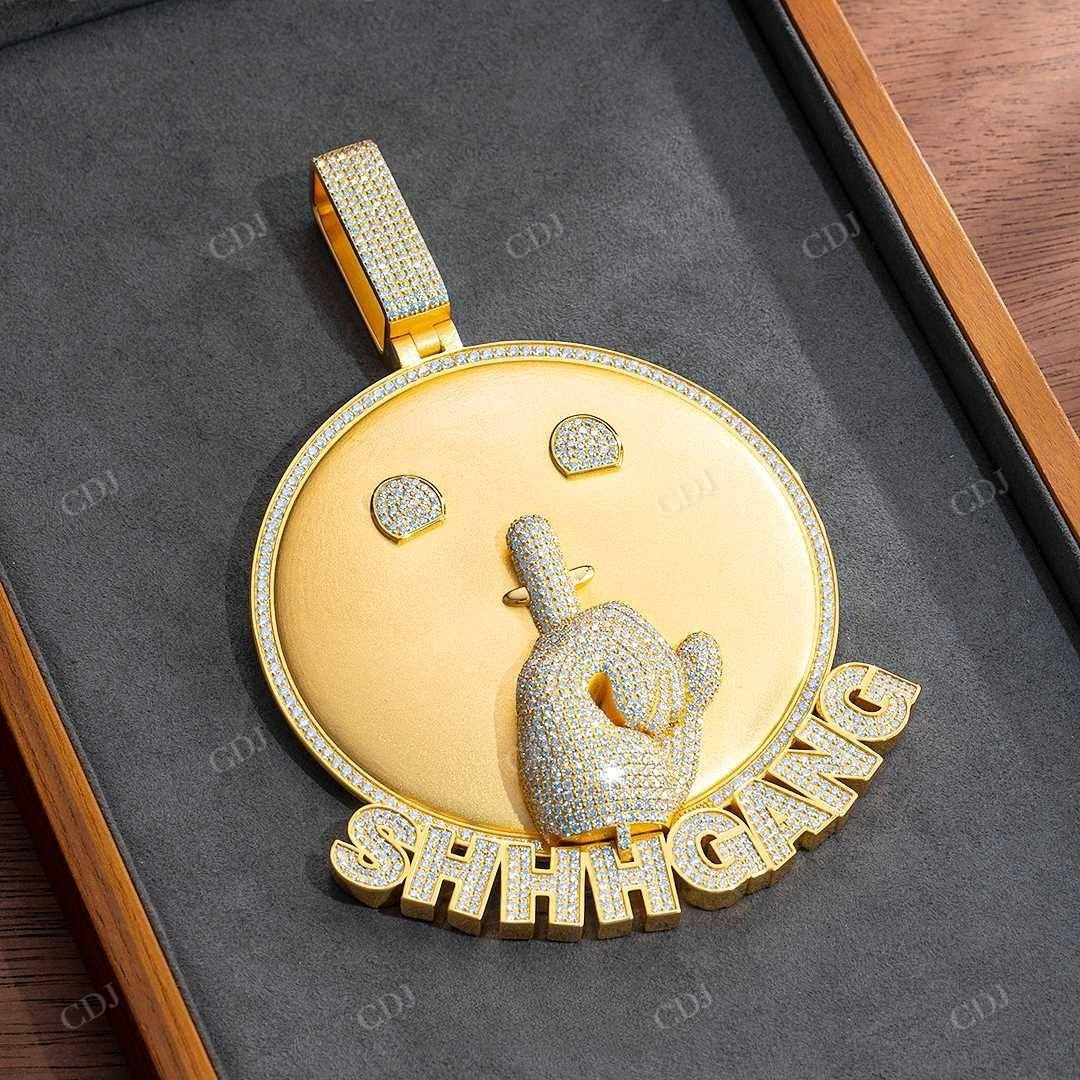
Custom Solid Gold Pendant
Premium solid 14K gold custom pendant with intricate three-dimensional design. Luxury showroom inventory for Beverly Hills and Manhattan retail.
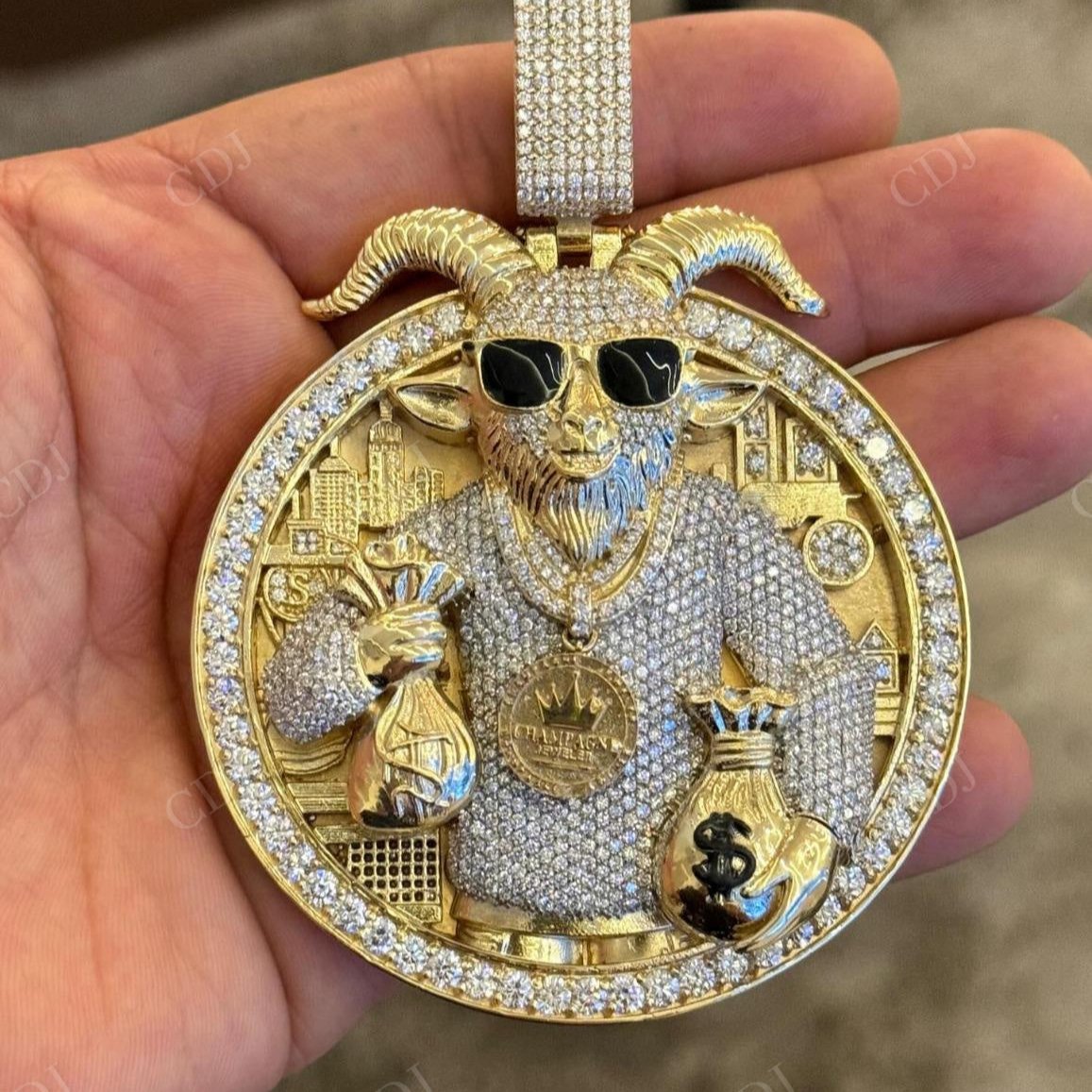
Round Custom Iced Pendant
Round custom hip hop pendant with full VVS moissanite ice-out coverage. Music industry styling team favorite across multiple US cities.
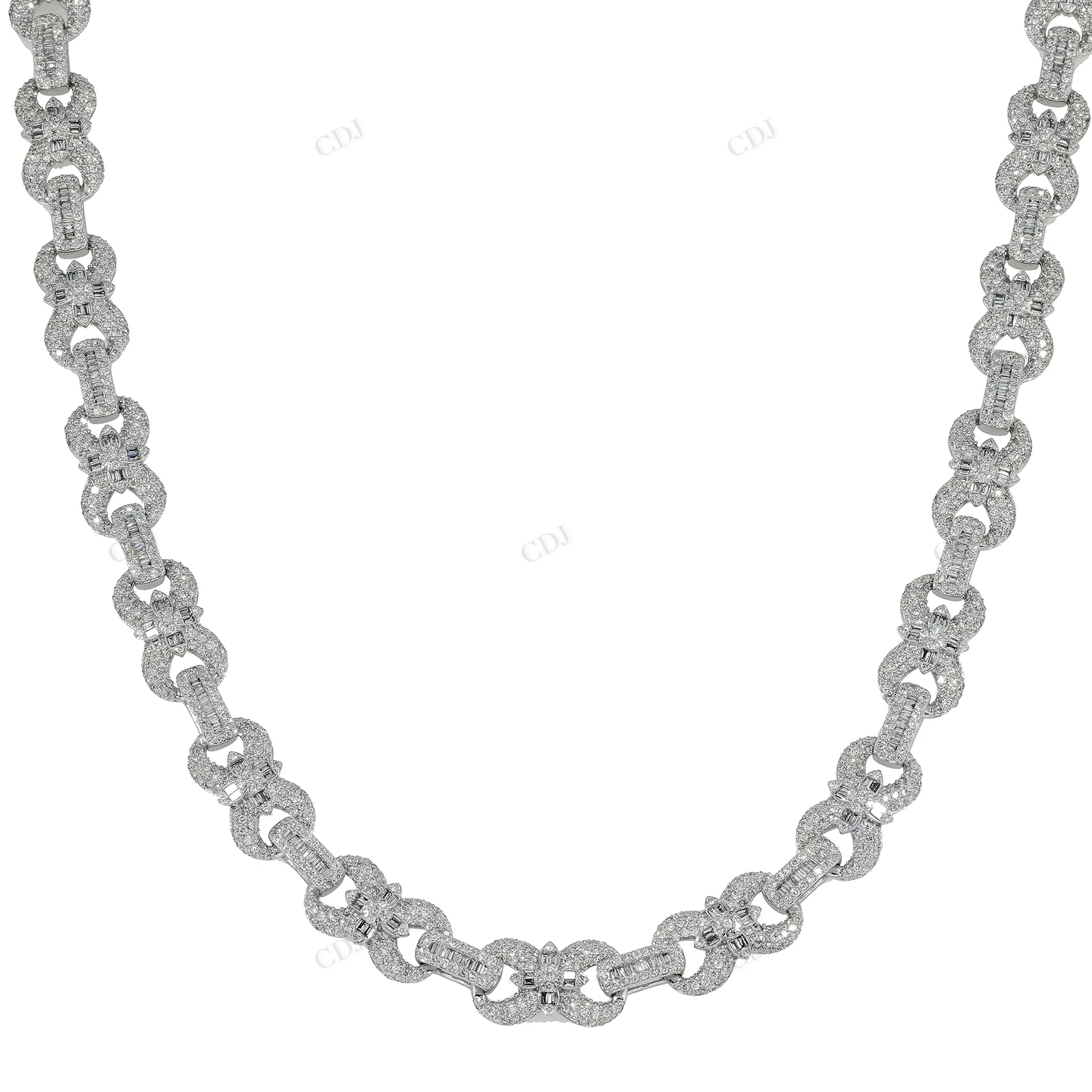
Custom Statement Pendant
Statement premium custom pendant with 16.75 CTW total stones. Music video styling and luxury retail inventory across LA and NYC.
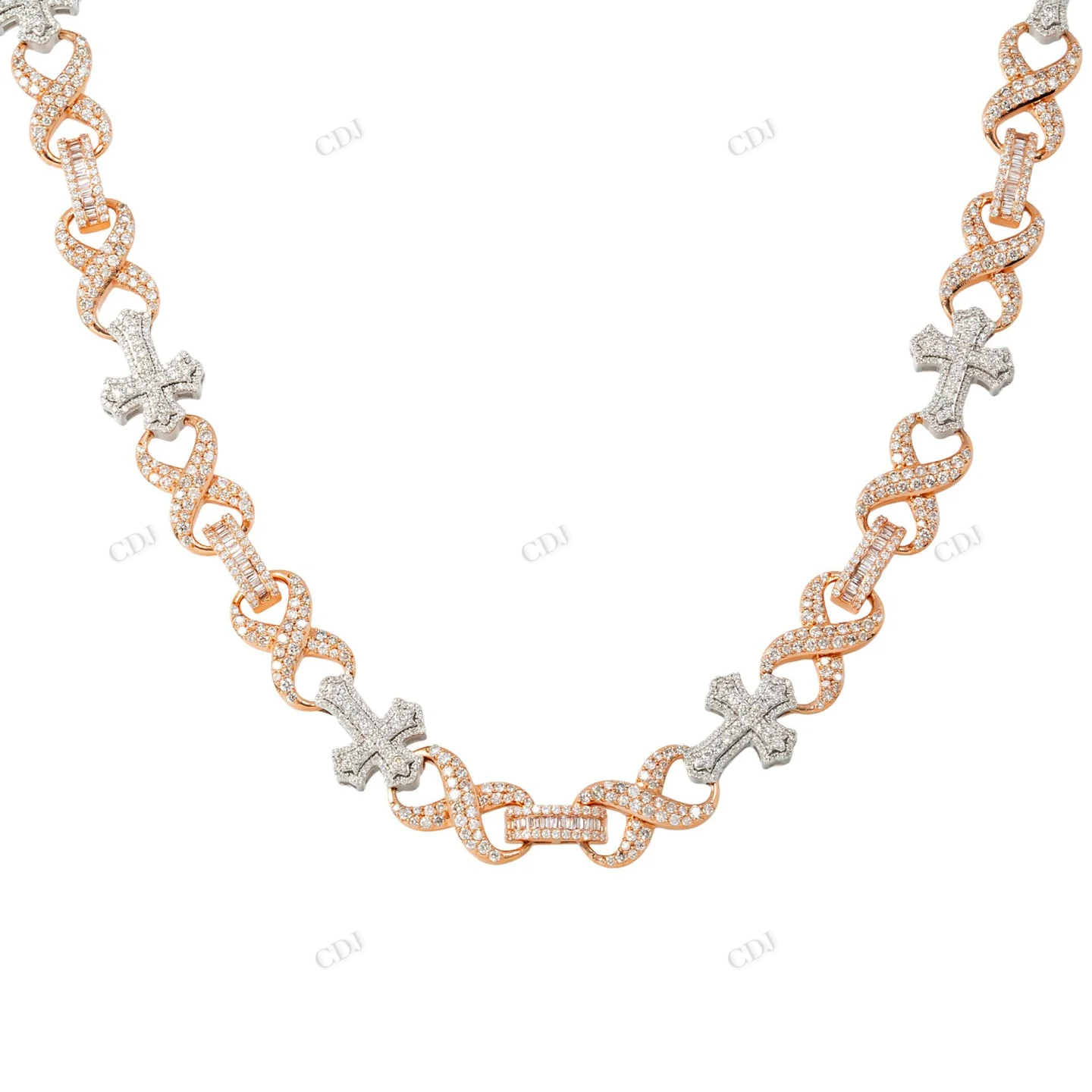
Custom Cross Pendant
Religious custom cross pendant with two-tone 14K gold construction. Dominant suburban retail piece across US markets with strong faith-based demographics.
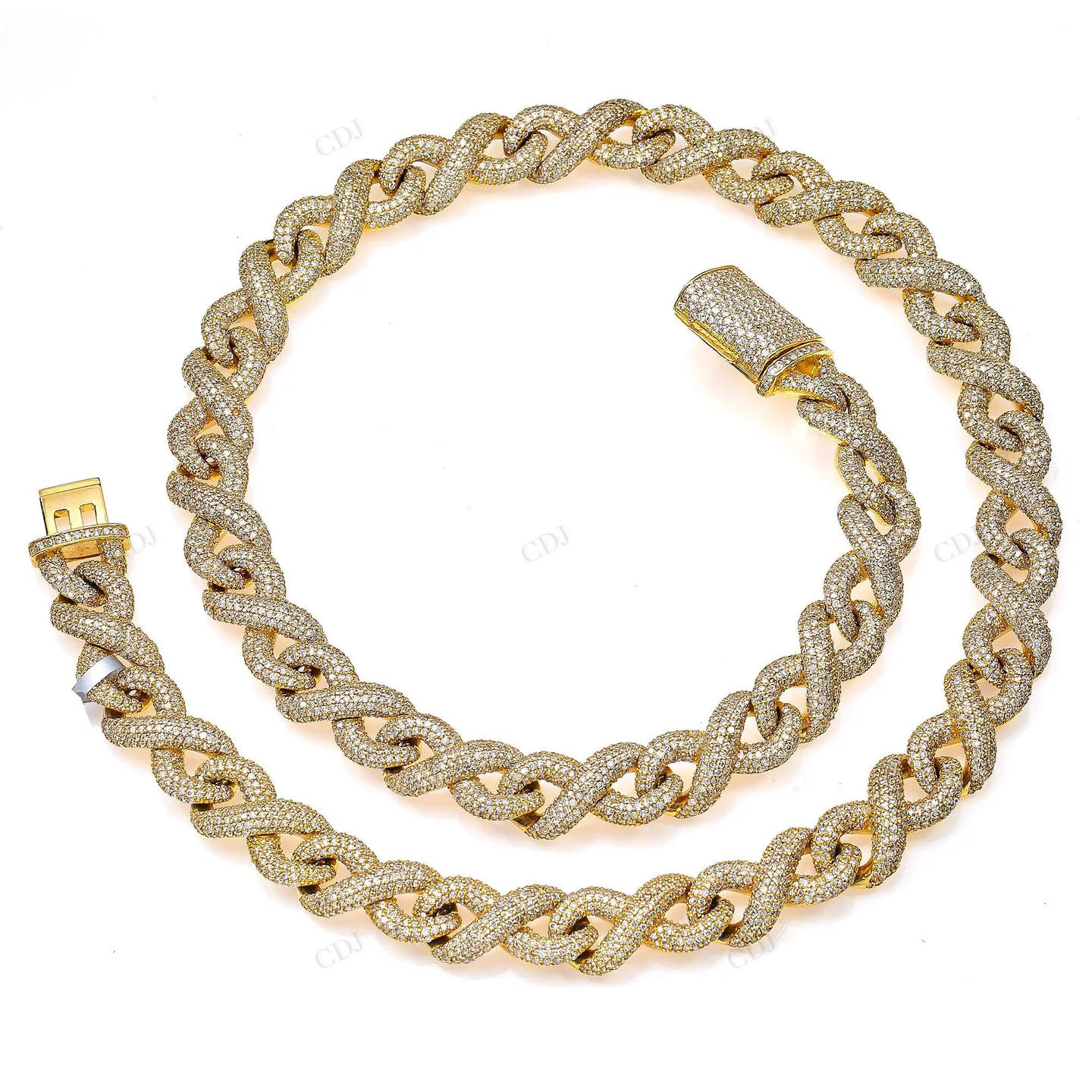
VVS Iced Statement Pendant
Music industry custom pendant with full VVS-D moissanite ice-out. Award show season production capacity reserved for repeat styling team orders.
Custom Pendant Care & Maintenance
Custom pendant longevity depends heavily on proper care and maintenance—particularly important because custom pendants typically represent significant emotional and financial investment for retail customers. Wholesale buyers should provide complete care guidance to extend pendant longevity, reduce warranty claims, and maintain customer satisfaction.
Daily Wear Care Practices
- Weekly cleaning: Wipe custom pendant with soft microfiber cloth after wearing to remove skin oils, lotions, and product residue that dulls stone brilliance and gold finish over time
- Bi-weekly deep cleaning: Soak in warm water with mild dish soap for 10-15 minutes, gently scrub with soft-bristle brush, rinse thoroughly, pat dry with soft cloth
- Avoid harsh chemicals: Remove custom pendant before swimming pools (chlorine), hot tubs (chlorine and heat), bleach exposure, harsh cleaning chemicals, or chemical sprays
- Remove during physical activity: Exercise, manual labor, contact sports create snag and impact risks that damage stone settings and bail attachments
- Apply jewelry last: Put on custom pendant after applying lotions, perfumes, hair products, and makeup to minimize chemical residue contact
Periodic Professional Maintenance
- Annual prong inspection: For daily wearers, inspect every prong or setting for tightness and stone security at minimum annually—catch loose stones before they're lost
- Biannual setting check: For occasional wearers, inspect settings every 18-24 months for early signs of wear
- Ultrasonic cleaning: Professional ultrasonic cleaning every 12-18 months restores brilliance lost to accumulated skin oil and product buildup
- Plating refresh: Plated pendants (silver + gold plating) require plating refresh every 18-36 months depending on wear intensity—typically $40-120 per service
- Bail inspection: Annual bail attachment inspection ensures structural integrity—catch metal fatigue before bail failure causes pendant loss
- Re-polishing: Light surface re-polishing every 2-3 years removes accumulated micro-scratches and restores mirror finish on metal surfaces
Storage and Long-Term Preservation
- Individual storage: Store custom pendant in dedicated soft pouch or jewelry box compartment separated from harder jewelry pieces
- Climate control: Store in stable temperature and humidity conditions to prevent metal oxidation and stone setting stress from material expansion/contraction
- Chain pairing: Store chain attached to pendant when not wearing to prevent bail wear from repeated chain attachment/removal
- Documentation storage: Keep all custom pendant documentation (CAD renders, certifications, invoices) in secure location for insurance and future reference
- Insurance considerations: Custom pendants over $1,000 retail value should be added to homeowner's or renter's insurance with appraisal documentation
20 Critical Custom Pendant Wholesale Buyer Questions
How much does a custom hip hop pendant cost wholesale in 2026?
Custom hip hop pendant wholesale pricing in 2026 ranges from $180 per piece for small 925 silver pieces under 25 grams to $50,000+ per piece for large solid 14K-18K gold pieces with VVS-EF lab diamond ice-out. The volume wholesale sweet spot sits at $480-2,400 per piece for medium-sized 14K gold custom pendants with VVS moissanite stone setting. A typical 50mm x 35mm custom letter pendant in 14K gold with VVS-D moissanite ice-out runs $1,200-2,200 wholesale. Pendant pricing scales primarily with three factors: metal weight (gold grams x current spot price), stone count and grade, and setting labor complexity. Custom design and CAD work adds $150-450 to first-piece cost, amortizing across volume orders. Gold prices reaching record highs in 2026 increased solid gold pendant pricing approximately 18-22% year-over-year.
What's the MOQ for custom wholesale hip hop pendants?
Standard MOQ for custom wholesale hip hop pendants across US manufacturers in 2026 starts at 1 piece for one-off custom designs paid at sample-tier pricing. White label custom pendants using existing molds with custom branding require 25-piece MOQ per design. Fully custom design with new CAD work and mold creation typically requires 10-piece MOQ to amortize design costs across multiple units, with strongest economics activating at 25+ pieces. Music industry single-artist pendants ordered through styling teams routinely produce as 1-piece commissions at $1,500-25,000 price points depending on complexity. Volume custom pendant pricing tiers activate at 25 pieces (5-10% off design fees), 100 pieces (15-25% off total), and 500+ pieces monthly (25-35% off with dedicated production capacity).
How long does custom pendant production take from order to delivery?
Custom hip hop pendant production times in 2026 range from 18 to 45 business days depending on complexity. Simple letter or initial pendants using existing baseline molds complete in 18-22 business days. Standard custom designs with new CAD work and casting complete in 25-32 business days. Complex multi-layer pendants with intricate stone setting require 32-42 business days. The production timeline breaks down across distinct phases: CAD design (2-5 days), client approval (1-3 days), wax model printing (1-2 days), casting (3-5 days), cleanup and stone setting (8-15 days), final polishing and QC (2-4 days), and shipping (3-7 days). Rush production at 30% premium can compress timelines to 15-20 days for stock-mold pieces and 22-28 days for custom designs—available for music video deadlines, award show styling, and album release cycles.
What is lost-wax casting and why is it used for custom pendants?
Lost-wax casting is the 6,000-year-old jewelry production method that remains the gold standard for custom hip hop pendant manufacturing in 2026. The process creates a wax model of the pendant (now typically 3D-printed from CAD files), invests the wax in plaster slurry, burns out the wax in a kiln leaving an exact cavity, then fills the cavity with molten precious metal under pressure or vacuum. After cooling, the plaster is broken away revealing the raw cast pendant ready for cleanup, stone setting, and finishing. Lost-wax casting produces precise dimensional accuracy, captures fine detail impossible with stamping or fabrication, allows complex three-dimensional shapes including undercuts and hollow construction, and works with any precious metal at any karat. The method dominates custom pendant production across the entire industry from boutique artisans to high-volume manufacturers because no alternative method matches lost-wax casting's combination of precision, detail capture, and production flexibility for one-off and small-batch custom work.
How does the CAD design process work for custom pendants?
CAD (Computer-Aided Design) creates a precise three-dimensional digital model of the custom pendant before any physical production begins. The process starts with the design brief: reference images, specifications, dimensions, and style direction provided by the buyer. A jewelry CAD specialist using software like Matrix, RhinoGold, or JewelCAD constructs the digital model over 4-12 hours depending on complexity. The designer generates 360-degree renders showing the pendant from all angles, close-up detail views of stone settings, and proportional sizing comparisons against standard chain widths. The buyer reviews these renders and requests modifications: size adjustments, stone arrangement changes, bail style modifications, or design element additions. Each revision round takes 1-3 business days. Once approved, the final CAD file is exported to STL format for 3D printer wax model production. CAD design costs typically run $150-450 per pendant depending on design complexity, including 2-3 revision rounds. Quality CAD work is critical because every error in CAD multiplies through the entire production process.
What metals are used for custom hip hop pendants?
Custom hip hop pendants use five primary metal options in 2026 wholesale production. 14K gold dominates at approximately 55-60% of custom pendant production due to optimal balance of color saturation, durability for stone settings, and price point for the $500-5,000 retail range. 10K gold accounts for 18-22% of production, primarily in budget tier and street retail markets where harder metal extends pendant longevity and lower gold content reduces cost. 18K gold reserves 12-15% for luxury custom pieces above $3,500 retail where richer color saturation justifies premium positioning. 925 sterling silver with heavy gold plating (3-5 micron minimum) covers 8-10% of accessible retail tier under $400. Solid platinum and palladium remain niche at under 1% combined, used for ultra-luxury custom commissions where buyers specifically request white-metal alternatives to white gold. Two-tone construction (yellow + white gold, or rose + white gold) appears in approximately 25-30% of custom pendants across all karats, creating visual contrast preferred by modern fashion-forward buyers.
How are stones set on custom hip hop pendants?
Custom hip hop pendant stone setting uses six primary methods in 2026 wholesale production. Four-prong setting accounts for approximately 40% of stone setting on custom pendants—four small prongs hold each stone with maximum visibility and brilliance. Pave setting represents 30% of production, with many small stones set close together separated by tiny gold beads creating an ice-covered appearance dominant in fully-iced custom pendants. Bezel setting covers 12% of production, surrounding each stone with continuous gold edge for security and modern aesthetic. Channel setting accounts for 8% used for baguette or emerald cut stones in linear arrangements. Bead setting covers 6% with tiny gold beads holding stones in clusters. Custom flush setting (gypsy setting) represents 4% with stones set into drilled cavities flush with the metal surface, popular for letter pendants and signature pieces. Stone setting represents approximately 25-35% of total custom pendant production cost, reflecting the intensive hand labor required for precise individual stone placement.
What types of custom hip hop pendants are most popular?
Custom hip hop pendant categories in 2026 wholesale concentrate across seven primary types. Letter and initial pendants lead at approximately 22% of custom pendant volume—single letters, initials, names, and word pendants requiring CAD customization for each commission. Religious pendants account for 18% including custom crosses, Jesus pieces, Mary pendants, religious symbols, and faith-based custom designs. Tribute and memorial pendants represent 14% honoring deceased family members or significant individuals with photo-realistic or symbolic representations. Brand and logo pendants cover 12% for businesses, music labels, and personal brand identity pieces. Animal and creature pendants account for 11% including signature designs like lions, gorillas, eagles, and custom creatures. Numeric and date pendants represent 9% with significant numbers, years, or addresses. Specialty character pendants (gaming, anime, sports, entertainment references) cover 8% with the remaining 6% distributed across unique one-off custom commissions defying standard category classification.
How do music industry artists order custom pendants wholesale?
Music industry artists access custom hip hop pendants through three primary wholesale channels in 2026. First, direct manufacturer relationships through styling teams that establish ongoing accounts for repeat custom pendant commissions—the dominant channel for established artists. Second, Los Angeles wholesale showrooms in the Jewelry District (Hill Street area) that offer in-person custom design consultations and rush production for music video styling deadlines. Third, NYC Diamond District for East Coast artists requiring premium lab diamond pieces with certification documentation. Music industry custom pendants drive approximately 12-15% of total US custom pendant wholesale revenue but generate disproportionate cultural influence over consumer demand patterns 3-9 months after public visibility. Typical music industry custom pendant orders run $5,000-50,000 per piece with rush production timelines of 15-25 days versus standard 25-35 days. Award show season (January-March) and album release cycles drive concentrated demand spikes requiring advance production capacity reservation.
What's the cost breakdown of a custom hip hop pendant?
A typical 50mm custom letter pendant in 14K gold with VVS-D moissanite stone setting breaks down as follows in 2026 wholesale pricing. Stone setting labor (80-150 individually-set stones depending on design) represents 28-35% of total cost—the largest cost component reflecting intensive hand labor. Gold weight (typically 18-32 grams of 14K depending on size) represents 25-32% of cost at current gold prices. CAD design and 3D printing (amortized across order quantity) represents 8-15% of cost on first piece, dropping to 2-5% on volume orders. Stones themselves (VVS-D moissanite at 1.5-4 CTW total) represent 12-18% of cost. Casting and metal preparation represent 8-12% of cost. Finishing, polishing, and quality control represent 6-9% of cost. Branded packaging and certificates represent 2-4% of cost. Net wholesale price runs $1,200-2,400 with manufacturer margins reflecting 25-32% gross profit on custom pendant work versus 22-30% on stock chain production.
Can I get my own brand logo or signature custom pendant made?
Yes. Brand logo and signature custom pendants represent approximately 12% of custom pendant wholesale volume. The process accommodates company logos, music label branding, personal monograms, custom characters, and unique signature designs. Brand pendant projects start with vector logo files (AI, EPS, or high-resolution PNG) or detailed reference images. CAD specialists convert 2D logos into appropriate 3D pendant designs with attention to proportional balance, structural integrity for the chain weight, and stone-setting feasibility if iced finishes are desired. Standard brand pendant projects require 8-piece MOQ to amortize CAD work and mold creation across multiple units, though smaller orders accept higher per-unit costs. Brand pendant production timelines run 22-32 business days from logo approval to first delivery. Full brand pendant collections—multiple pendant sizes or variations—qualify for design fee discounts and priority production scheduling at 50+ total piece commitments. Brand pendants typically include trademark verification documentation when applicable to confirm legitimate ownership of branded elements before production proceeds.
What stone grades work best for custom hip hop pendants?
Stone grade selection for custom hip hop pendants depends on retail price tier and customer expectations. VVS moissanite leads custom pendant wholesale at approximately 58-62% market share due to optimal price-to-brilliance ratio across the $500-3,500 retail range. Moissanite delivers higher refractive index (2.65 vs diamond's 2.42) and dispersion (0.104 vs 0.044) than diamond, producing more visible rainbow fire under stage lights, music video cameras, and social media ring lights—critical for hip hop styling visibility. VVS-EF lab-grown diamond accounts for 22-26% of custom pendant production, particularly for premium tier pieces above $3,500 retail where buyers expect certified stones and traditional diamond appearance. The 12-15% drop in lab diamond wholesale prices through 2026 expanded lab diamond share in custom pendants. Premium AAAAA cubic zirconia covers 10-12% of budget tier custom production under $400. Natural diamonds remain niche at under 2% of custom pendant production, concentrated in ultra-luxury Beverly Hills and Manhattan showroom custom commissions where natural stone certification matters to buyers.
How big should a custom hip hop pendant be?
Custom hip hop pendant sizing in 2026 follows established proportional standards based on chain width pairing and intended visibility. Small pendants at 25-35mm height work for layering with multiple chains and women's fashion pieces. Medium pendants at 40-50mm height represent the volume sweet spot pairing with 6-10mm Cuban link chains and standard hip hop styling—approximately 45% of custom pendant orders. Large pendants at 55-75mm height create statement pieces pairing with 10-15mm chains for premium hip hop and music industry styling, approximately 28% of custom orders. Extra-large pendants at 80-120mm height target music video styling and signature pieces requiring 15-25mm Cuban links to balance proportions—approximately 15% of custom orders. Pendant width typically runs 0.7-0.9 of pendant height for balanced proportions. Pendant thickness ranges 4-12mm depending on design complexity—thicker construction accommodates more elaborate three-dimensional designs and multiple stone-setting layers. Larger pendants require proportionally thicker construction to prevent visual flatness and structural weakness.
What's the difference between handmade and CAD-designed custom pendants?
Handmade and CAD-designed represent two distinct custom pendant production approaches with different cost structures, design capabilities, and quality characteristics. CAD-designed pendants use computer-aided design software to create precise 3D models exported to 3D printers for wax model production—the dominant method in 2026 covering approximately 95% of custom pendant manufacturing. CAD enables consistent dimensional accuracy across production runs, easier client review through 360-degree renders before physical production, simpler revision workflow for design modifications, and reliable scaling from one-off pieces to volume orders. Pure handmade custom pendants account for 5% of production, where artisans hand-carve wax models or hand-fabricate pendants directly in metal. Handmade work offers organic artistic character impossible to replicate digitally and traditional craftsmanship appeal preferred by some luxury buyers. Handmade pendants cost 40-80% more than CAD equivalents reflecting hand-labor intensity and cannot reliably scale beyond 1-2 piece commissions. Most premium custom work uses CAD design with hand-finished detailing combining both methods' advantages.
How do I evaluate a custom pendant manufacturer before ordering?
Evaluate custom pendant manufacturers using six critical assessment criteria before committing to large orders. First, request a portfolio of recent custom work including photographs of completed pieces showing finish quality, stone setting consistency, and design execution complexity. Second, order a sample piece using one of their existing molds at sample-tier pricing to evaluate manufacturing quality firsthand before custom CAD investment. Third, verify gold karat through independent acid testing on samples (test kits cost under $20) to confirm metal authenticity. Fourth, review CAD design samples and request a small CAD project ($150-200 design only) to evaluate their design capabilities and communication workflow before larger commitments. Fifth, check supplier business legitimacy through registration documents, physical workshop address verification via Google Maps Street View, Google Business Profile presence with current photos, and reviews from previous wholesale buyers. Sixth, review supplier social media for production photos showing actual workshop operations rather than generic stock photography. Avoid suppliers requesting full payment upfront without samples, refusing CAD revision requests, or offering prices significantly below market norms.
What payment terms work for wholesale custom pendant orders?
Custom pendant wholesale payment structures differ from stock chain orders due to design investment and production complexity. Standard custom pendant payment splits across three milestones in 2026 wholesale practice. CAD design deposit of $150-450 paid upfront covers design work through approved renders—non-refundable because design labor has been performed regardless of production decision. Production deposit of 50% of net wholesale value due upon CAD approval releases the project to wax printing, casting, and stone setting phases—covers material costs and committed labor through production. Final balance of 50% due before shipment completes payment for finished pendant and triggers shipping authorization. Wire transfer dominates custom pendant payments at approximately 55-60% of transactions, preferred for orders over $5,000. ACH transfer accounts for 18-22% of payments, ideal for repeat US-based wholesale buyers. Established wholesale relationships qualify for Net-15 or Net-30 terms after the third successful order with consistent payment history. Cryptocurrency payments (USDT, USDC) reached 8-12% of custom pendant transactions by 2026, growing with international and crypto-native brand segments.
How do I source custom pendants for my Shopify or Instagram brand?
Sourcing custom pendants for online brands follows a structured approach optimizing margin economics and supply reliability. First, define brand custom pendant strategy: signature pendant collection (5-10 designs marketed across all customers) or fully personalized one-off custom service (each customer gets unique design). Signature collections offer better margins and inventory predictability; personalized custom commands premium pricing but requires more operational management. Second, identify 2-3 potential manufacturers offering custom pendant services with strong CAD capability and portfolio depth in your target style direction (street, luxury, religious, fashion). Order CAD-only sample projects from each to evaluate design quality and communication. Third, develop 3-5 baseline signature designs through CAD work with your primary manufacturer, producing first samples to verify execution quality before full collection launch. Fourth, structure customer pricing with margin minimum of 200% over wholesale cost to accommodate marketing costs, returns, and operational expenses. Most successful Shopify custom pendant brands launch with signature collections first, then expand to fully personalized custom services after establishing operational reliability and audience trust.
What's the difference between hollow and solid custom pendants?
Hollow and solid construction represent fundamentally different custom pendant approaches affecting weight, durability, cost, and perceived value. Solid construction fills the entire pendant volume with precious metal, creating maximum weight, structural integrity, and authentic luxury feel—the dominant approach for premium custom pendants at approximately 75% of wholesale production. Solid pendants cost 30-60% more than hollow equivalents due to metal weight requirements but command proportionally higher retail pricing and customer satisfaction. Hollow construction creates pendants with cavity interiors reducing metal weight while maintaining external appearance. Hollow pendants weigh 35-55% less than solid equivalents of identical exterior dimensions, enabling larger statement pieces at accessible price points without prohibitive cost. Hollow construction works best for purely decorative pendants without intensive stone-setting requirements. Risk factors include greater vulnerability to dent damage from impact and reduced resale value compared to solid construction. Most successful wholesale custom pendant programs offer both options with clear price-point differentiation, allowing customers to select based on budget and use-case priorities.
How should I care for custom hip hop pendants?
Custom hip hop pendant care guidance for retail customers covers five maintenance practices preserving pendant value and longevity. First, daily wear care requires gentle cleaning every 2-3 weeks with mild dish soap, warm water, and soft-bristle brush to remove skin oils and product residue that dulls stone brilliance and gold finish. Second, periodic prong inspection annually for daily wearers identifies loose stones requiring re-tightening before stone loss occurs—particularly important for fully-iced pendants with many small stones. Third, storage practices keep pendants in individual soft pouches separated from harder jewelry pieces to prevent surface scratching of polished gold. Fourth, professional maintenance every 12-18 months includes ultrasonic cleaning, prong tightening, plating refresh if applicable, and structural inspection from qualified jewelers. Fifth, chain pairing considerations require selecting chains appropriately rated for pendant weight—heavy pendants paired with insufficient chain strength cause premature chain wear at the pendant attachment point. Provide retail customers with care cards detailing these practices to extend pendant longevity and reduce warranty claims.
How do I avoid scams or low-quality custom pendant manufacturers?
Avoid custom pendant manufacturer scams and low-quality producers using six specific evaluation tactics. First, never pay full payment upfront for custom pendant work—legitimate manufacturers follow industry-standard CAD deposit, production deposit, and balance-due payment structure. Suppliers requiring 100% advance payment correlate strongly with scam operations. Second, require CAD renders before production starts—legitimate manufacturers always show 3D design renders for client approval before any physical production begins. Suppliers skipping CAD review phase indicate either inability to perform proper design work or intent to deliver substandard products. Third, verify supplier physical presence through Google Maps Street View confirmation of stated workshop address, Google Business Profile current photos, and online review history from verified previous customers. Fourth, request samples or smaller test orders before large custom commitments to evaluate quality firsthand. Fifth, independent acid testing on metal samples verifies stated karat (test kits under $20). Sixth, watch for suspicious pricing significantly below market norms—custom pendant pricing follows predictable formulas based on metal weight, stone count, and labor; dramatic discounts often indicate either undisclosed quality compromises or outright fraudulent operations.
Ready to Order Custom Pendants?
Apply this complete custom pendant manufacturing framework to your sourcing process. Send us your concept—reference images, dimensions, stone preferences, metal choice, quantity needed, and target delivery timeline. We respond within 4 hours with CAD design quotes, sample piece options, and complete production timeline documentation.